Property Type & Space Planning
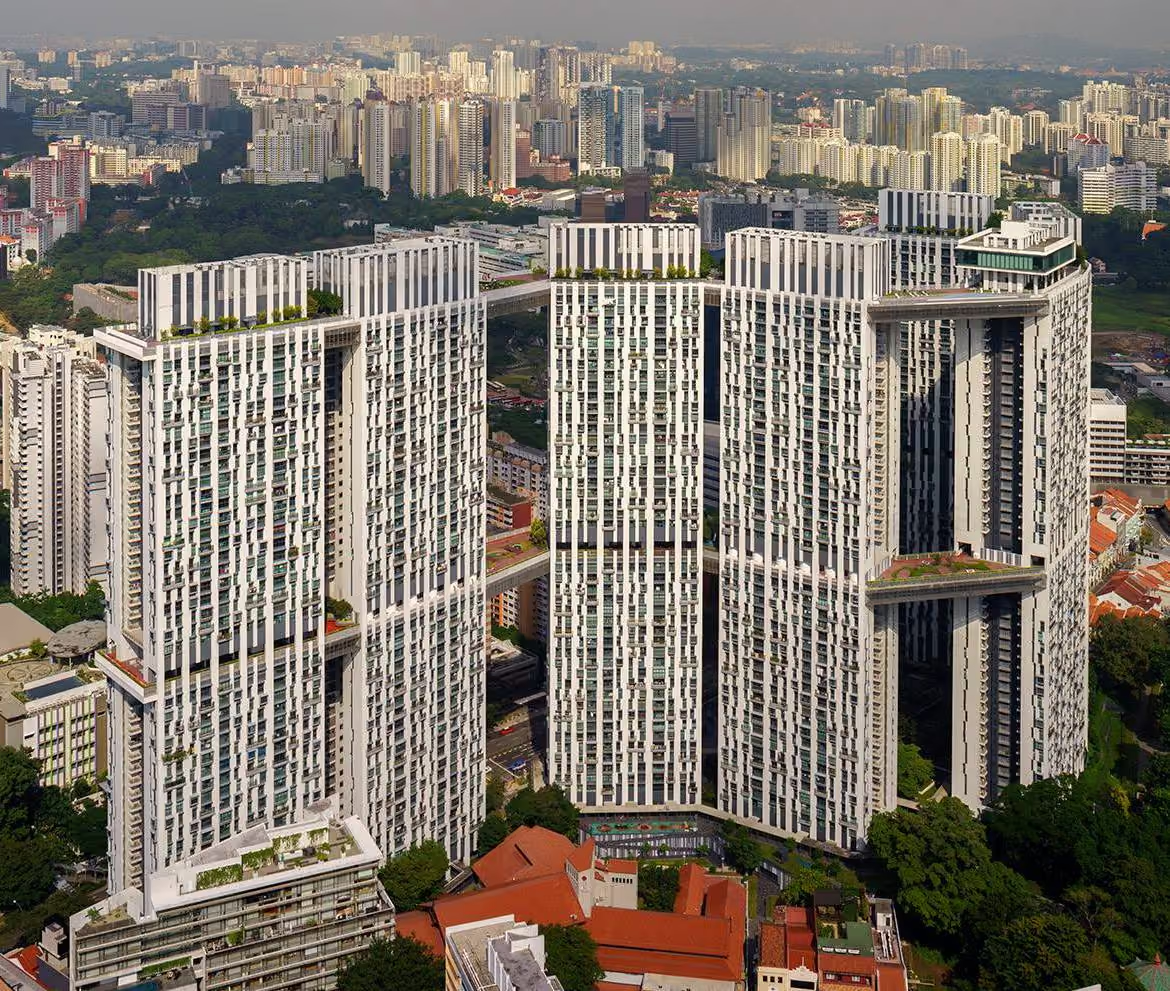
UrbanVille @ Woodlands Renovation
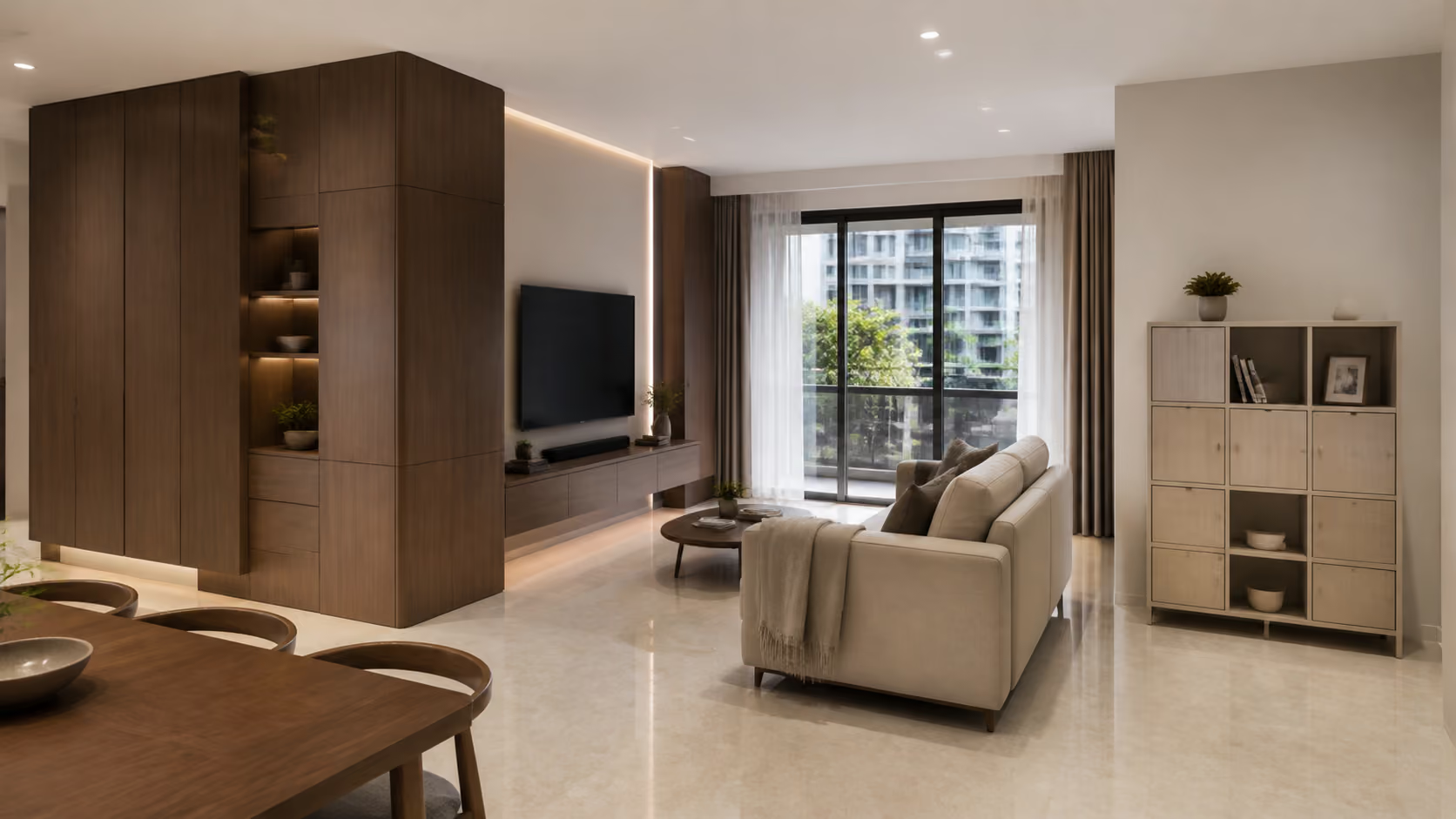
Neither is inherently better — IKEA furniture suits homeowners with tighter budgets or those planning to move, while custom carpentry suits homeowners who want to maximise storage and plan to stay long-term. Many homeowners combine both.
Neither is inherently better — IKEA furniture suits homeowners with tighter budgets or those planning to move, while custom carpentry suits homeowners who want to maximise storage and plan to stay long-term. Many homeowners combine both.
Luxior's standard specification for most custom carpentry is 3-ply plywood. 5-ply plywood is available as an optional upgrade for additional structural strength, and aluminium honeycomb panels are available upon request for enhanced moisture resistance in humid areas like kitchens and bathrooms.
Generally not, since custom carpentry is built into the space and can't be relocated. Ready-made furniture is usually the more practical choice for renters or homeowners planning to move within a few years.
Yes, this is a common and practical approach. Many homeowners invest in custom carpentry for high-use areas like kitchens and wardrobes while using ready-made furniture for loose furnishings elsewhere.
Furnishing a home in Singapore usually comes down to a practical question: do you invest in custom carpentry built specifically for your space, or furnish with ready-made pieces from IKEA? Both are legitimate, widely used approaches, and neither is universally "better" — the right answer depends on your budget, how long you plan to stay, and how much you want your storage tailored to your exact lifestyle.
Key Takeaway IKEA furniture offers affordability, quick installation and flexibility for homeowners who may move in the future, while custom carpentry offers space-maximising built-in storage tailored to your exact layout and long-term needs. Many Singapore homeowners find a hybrid approach — custom carpentry in high-use areas paired with quality ready-made furniture elsewhere — delivers the best balance of function, aesthetics and budget.
Quick Answer: Is custom carpentry or IKEA furniture better for a Singapore home? Neither is inherently better — each suits different needs. IKEA furniture is a practical, affordable choice for homeowners with tighter budgets, those renting or planning to move within a few years, or anyone furnishing quickly without a long design planning process. Custom carpentry is better suited to homeowners who want to maximise storage in a compact HDB or condo layout, plan to stay long-term, and want furniture tailored precisely to their space and lifestyle. Most homeowners in Singapore end up combining both rather than choosing one exclusively.
Want a room-by-room recommendation? Share your floor plan and budget with us on WhatsApp and we’ll help you decide where built-ins add value and where ready-made furniture makes more sense.
Almost every homeowner furnishing a Singapore flat eventually weighs custom carpentry against ready-made furniture, and IKEA is usually the benchmark for the latter given how widely used it is locally. Both approaches have earned their place in Singapore homes for good reason — one offers speed, affordability and flexibility, the other offers precision, storage optimisation and long-term tailoring.
This guide isn't about declaring a winner. It's about helping you understand where each option genuinely excels, so you can make decisions room by room rather than committing to one approach for your entire home. For a broader look at how carpentry fits into an overall renovation budget, our guide on HDB Renovation Cost Singapore 2026 breaks down typical costs across every part of the home.
IKEA furniture is a well-established, affordable option that works particularly well for certain homeowner situations. It offers a lower upfront cost compared to custom-built alternatives, making it accessible for homeowners working with a smaller furnishing budget. Pieces are ready-made and can typically be purchased and assembled within days, which suits homeowners on a tight moving timeline or those who prefer not to wait through a design and fabrication process.
IKEA furniture is also well suited to renters or homeowners who anticipate moving within a few years, since standard modular pieces can be disassembled, transported and reused in a new home far more easily than built-in carpentry. The trade-off is that IKEA furniture comes in standard sizes, which means it may not perfectly fit every nook, alcove or awkward corner in a compact Singapore layout — though IKEA's modular systems do offer a reasonable degree of configuration within their standard size ranges.
Custom carpentry is built specifically for your home's dimensions, layout and storage needs, which makes it particularly effective in Singapore's typically compact HDB and condo layouts. It's best suited to homeowners who want to maximise every available inch of space — built-in wardrobes that extend to the ceiling, kitchen cabinets that wrap around awkward columns, or storage designed around a household shelter that would otherwise sit awkwardly in a room.
Custom carpentry also gives homeowners flexibility in materials, finishes, hardware and internal configuration that ready-made furniture generally can't match, along with a more seamless, built-in aesthetic. This approach makes the most sense for homeowners planning to stay in their home long-term, since the upfront investment is amortised over many years of tailored use.
✅ Designer Insight: Our designers often find that homeowners underestimate how much usable storage compact HDB flats can gain from carpentry designed specifically around the room's actual dimensions — a wardrobe built into an odd-shaped corner, for instance, can capture space that a standard-sized ready-made unit would simply leave empty.
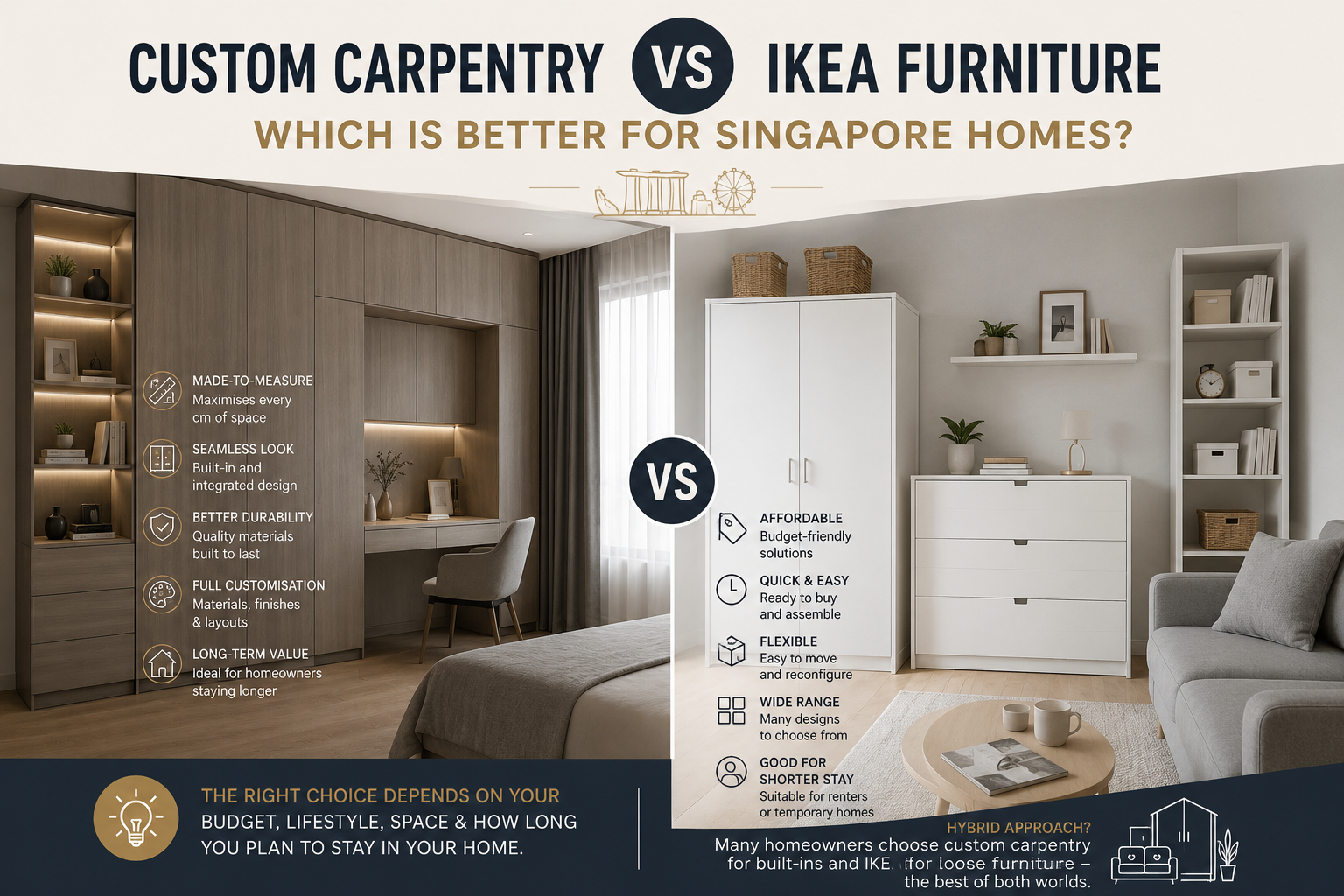
IKEA furniture generally costs less upfront than equivalent custom carpentry. A standard wardrobe from IKEA might cost a few hundred to just over a thousand dollars depending on size and configuration, while an equivalent built-in wardrobe from a custom carpentry firm typically starts from S$1,500 to S$3,000 or more, depending on dimensions, materials and internal fittings.
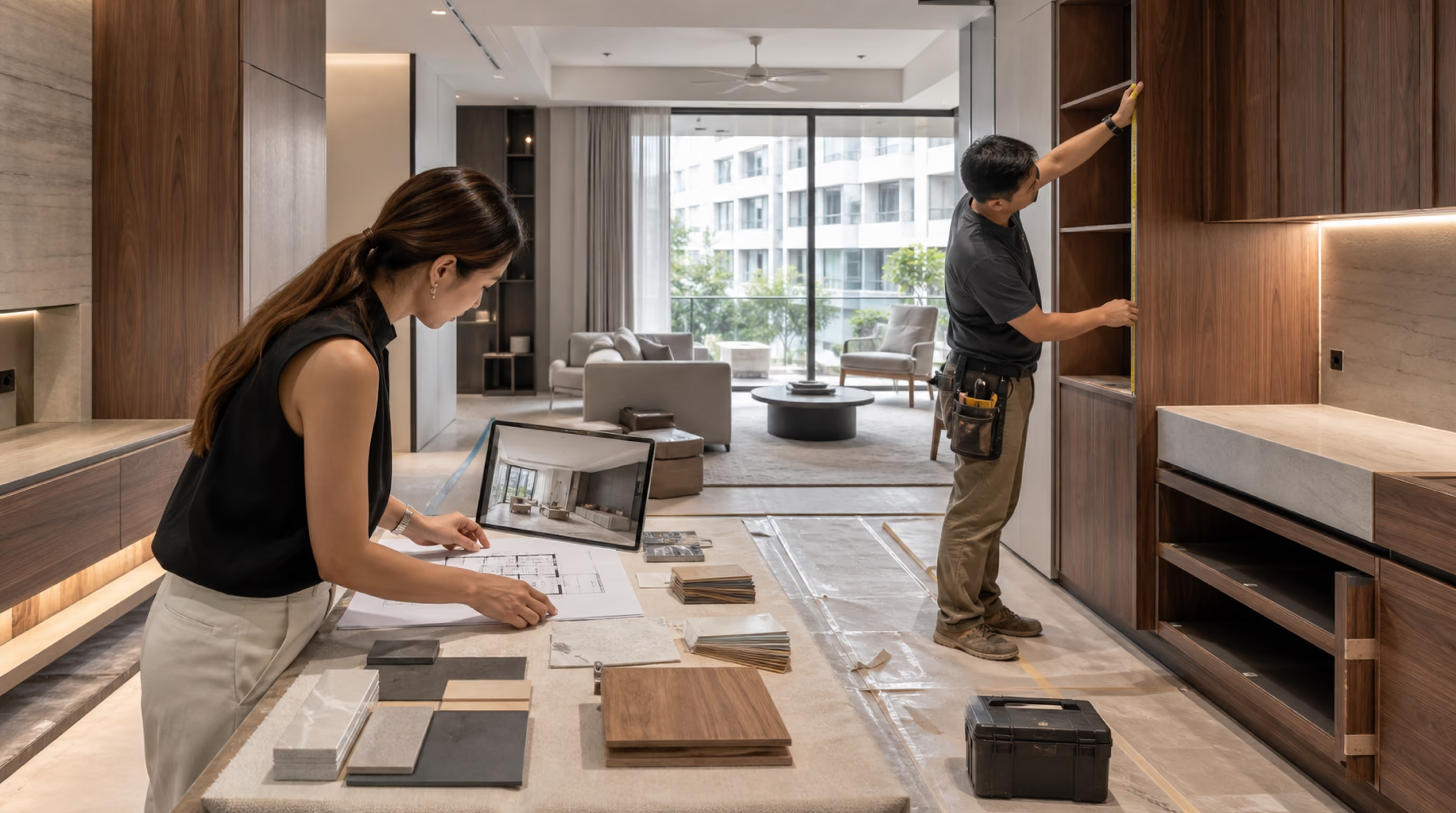
This cost difference reflects what you're paying for — custom carpentry involves bespoke measurement, material selection, fabrication and on-site installation tailored to your specific space, while ready-made furniture benefits from mass production efficiencies that keep costs down. Neither pricing structure is inherently better value; it depends on whether the tailored fit and long-term durability of custom carpentry matters more to you than the lower upfront cost and flexibility of ready-made furniture.
Space efficiency is where custom carpentry most consistently proves its value in Singapore's smaller flat sizes. A 3-room or 4-room HDB flat often has limited floor area to work with, and every centimetre of unused space around columns, sloped ceilings, or oddly proportioned rooms represents storage potential that standard-sized furniture typically can't capture.
Custom carpentry can be designed to run floor-to-ceiling, wrap around structural columns, integrate with the household shelter, or fit precisely into narrow spaces that off-the-shelf furniture would leave partially empty. For homeowners furnishing a smaller flat where every inch counts, this level of optimisation often justifies the higher upfront investment.
This matters even more in older resale flats, where layouts sometimes include awkward structural elements — a protruding beam, an oddly placed switch panel, or a narrow alcove beside the household shelter — that standard modular furniture simply wasn't designed to accommodate. Custom carpentry can be measured and fabricated specifically around these constraints, turning what would otherwise be dead space into functional storage.
Material choice significantly affects the durability, weight and moisture resistance of custom carpentry, and there's no single "best" material — the right choice depends on your budget, lifestyle, intended use, desired durability and maintenance preferences.
At Luxior Concept, our standard specification for most custom carpentry is 3-ply plywood, which offers a reliable balance of strength, cost-efficiency and workability for the majority of household carpentry needs, including wardrobes, cabinets and general storage units.
For homeowners who prefer additional structural strength — for example, in larger wardrobe units or carpentry that will bear heavier loads — 5-ply plywood is available as an optional upgrade upon request. The additional layers provide greater rigidity and resistance to warping over time.
For clients specifically looking for enhanced moisture resistance and long-term durability, particularly in kitchens, bathrooms and other humid areas of the home, aluminium honeycomb panels are also available upon request. This material performs differently from timber-based plywood, offering strong resistance to moisture-related swelling or delamination, which can be a meaningful consideration in Singapore's humid climate for areas with frequent water exposure.
✅ Designer Insight: In many resale HDB projects, we find that homeowners assume upgrading every carpentry piece to the most moisture-resistant material available is necessary throughout the home. In practice, the right material really does depend on the specific area — 3-ply plywood performs well for bedroom wardrobes and living room storage, while the moisture-resistance benefits of aluminium honeycomb panels matter most specifically in kitchens and bathrooms.
Singapore's tropical humidity affects furniture and carpentry differently depending on material and construction quality. Ready-made furniture from IKEA is generally designed and tested for a range of climates, and performs reasonably well in typical living areas of a Singapore home with normal humidity levels and adequate ventilation.
Custom carpentry's performance in humid conditions depends heavily on material specification and construction quality. Standard 3-ply plywood performs well in most areas of the home under normal humidity conditions. In areas with sustained higher humidity or direct water exposure — kitchens, bathrooms, and yard areas — upgrading to 5-ply plywood or aluminium honeycomb panels can provide additional resistance to warping, swelling or delamination over the years, which is why Luxior offers these as optional upgrades specifically for clients prioritising long-term durability in these zones.
✅ Designer Insight: One common issue we encounter in humid areas like kitchens and bathrooms is timber-based furniture or carpentry showing early signs of swelling at the edges after a few years, particularly where ventilation is limited. Discussing your specific room's humidity exposure with your designer before finalising material specification helps avoid this down the line.
Your housing situation and future plans meaningfully affect which approach makes more sense. Homeowners renting their flat, or planning to move again within the next few years, generally benefit more from IKEA furniture's portability — pieces can be disassembled, moved and reconfigured in a new home relatively easily.
Homeowners who own their flat and plan to stay long-term generally get more value from custom carpentry, since the built-in nature that makes it harder to relocate also means it's specifically optimised for a space you're not planning to leave. The investment is amortised over many years of tailored daily use rather than needing to be portable or resellable.
IKEA furniture can typically be purchased and assembled within days, making it a practical choice for homeowners on a tight move-in timeline or furnishing a home incrementally over time. Custom carpentry involves a longer process — measurement, design confirmation, fabrication and on-site installation — typically taking several weeks from order to completion, depending on the complexity and number of pieces involved.
💡 Quick Tip: If your move-in date is tight, consider furnishing initially with ready-made pieces for lower-priority areas while custom carpentry is being fabricated for higher-priority spaces like the kitchen or main wardrobe, rather than delaying your entire move-in around carpentry lead times.
✅ Designer Insight: At Luxior Concept, we often recommend a hybrid approach rather than choosing one method exclusively for the entire home. This typically means investing in custom carpentry for high-use, space-critical areas — kitchen cabinetry and bedroom wardrobes in particular — where tailored storage and long-term durability matter most, while using quality ready-made furniture for loose furnishings such as dining tables, sofas, bookshelves or occasional pieces that don't need to be built into the room's structure.
This hybrid approach tends to balance functionality, aesthetics and budget more effectively than an all-or-nothing decision. If you are also deciding on the wider visual direction, browse our interior design concepts to see how materials, storage and style can work together. It allows homeowners to direct their carpentry budget toward the areas where built-in storage delivers the most day-to-day value, while keeping overall furnishing costs manageable through ready-made pieces elsewhere in the home.
Kitchen. Custom carpentry is generally the stronger choice here, since kitchen storage needs to be precisely configured around appliances, plumbing and the room's specific layout. For examples of storage-led planning, explore our dry kitchen and wet kitchen space pages.
Bedroom wardrobes. Custom carpentry tends to maximise storage most effectively in bedrooms, particularly in compact HDB layouts where a built-in wardrobe can extend fully to the ceiling and wrap around awkward corners. See our master bedroom and walk-in wardrobe space pages for storage-led layouts.
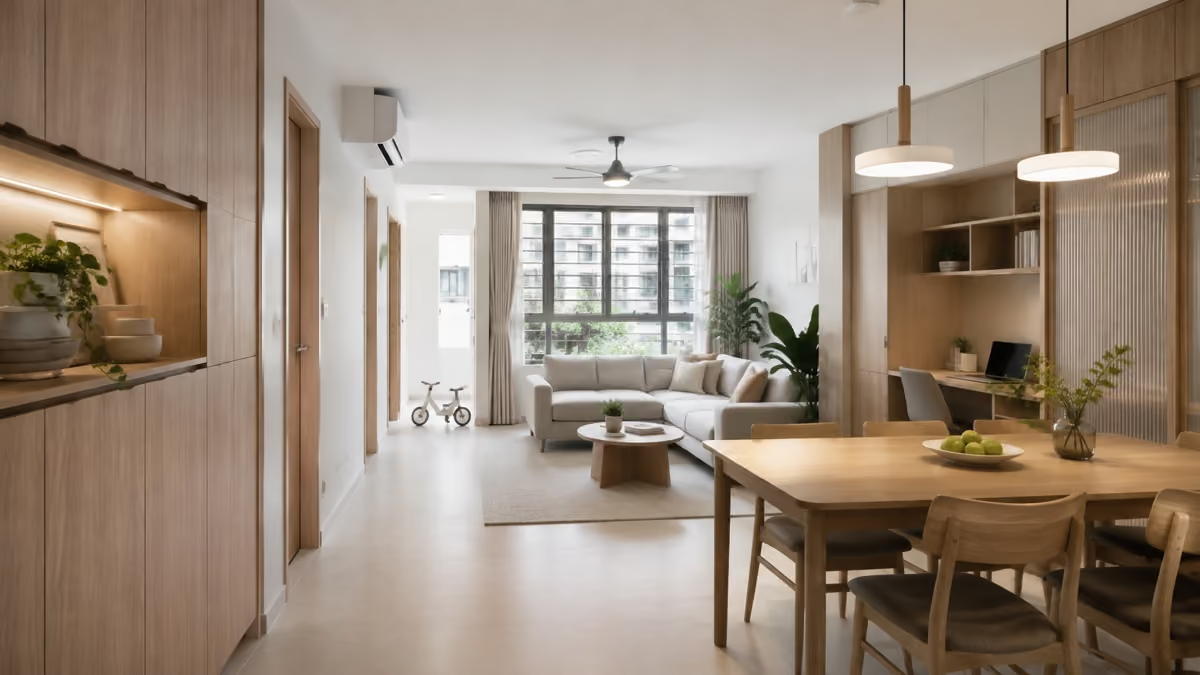
Living room. This is often where a hybrid approach works well — a custom-built TV console or storage unit paired with ready-made seating, coffee tables or shelving. Browse our living room space page for ideas that keep loose furniture flexible.
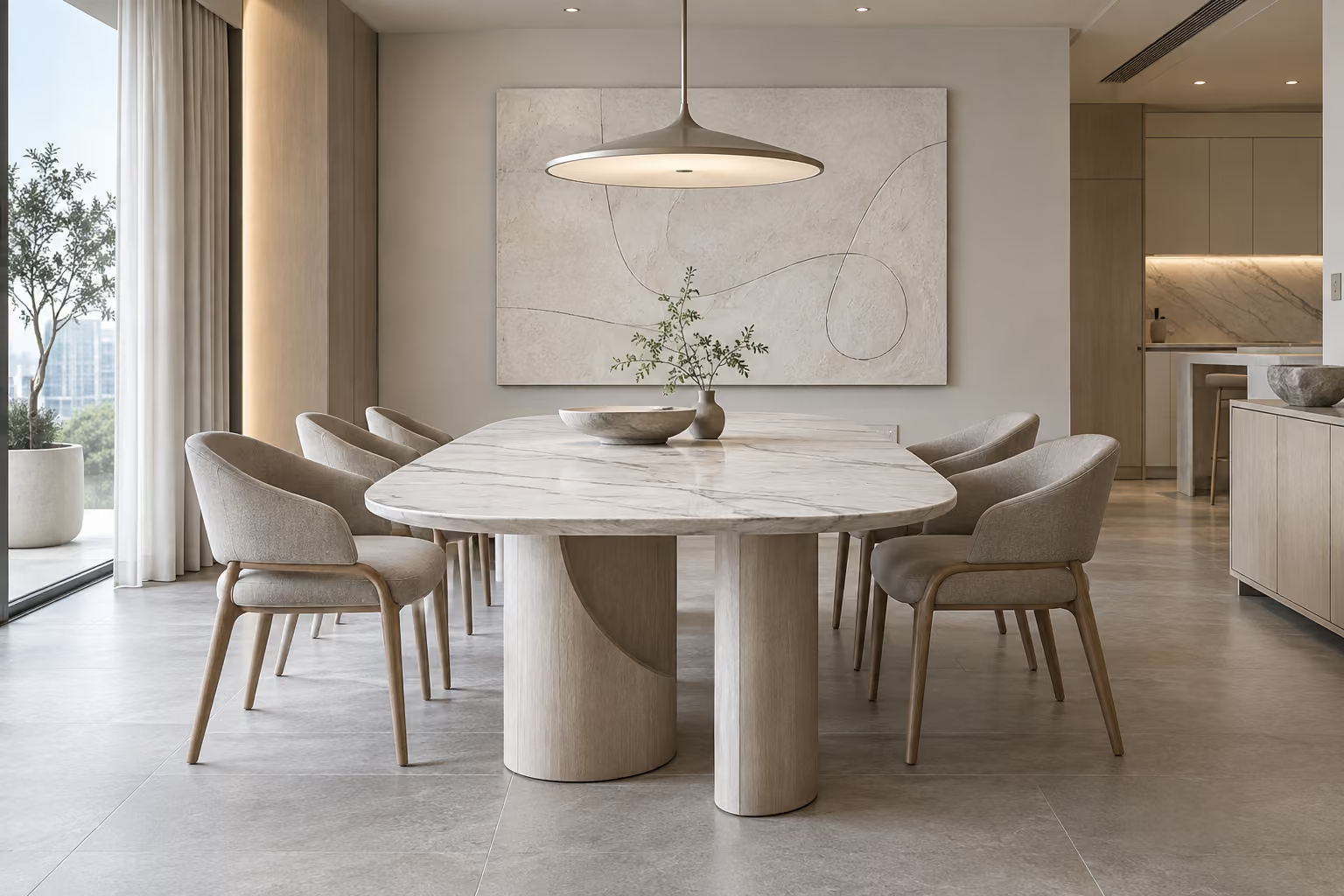
Dining area. Ready-made furniture is frequently a practical choice here, since dining tables and chairs don't typically need to be built into the room's structure.
Study or home office. Either approach can work well, depending on whether you need a highly specific desk configuration (favouring custom carpentry) or a straightforward setup that ready-made furniture can accommodate. Explore our study room space page if you need a more tailored desk and storage setup.
Planning your own mix? Browse the relevant space ideas, then send us your floor plan on WhatsApp for a practical recommendation based on your rooms, storage needs and budget.
Well-executed custom carpentry, particularly in kitchens and bedrooms, is often viewed favourably by resale buyers for its built-in, finished appearance and functional storage. However, highly personalised carpentry designs that don't suit a broader range of tastes can sometimes appeal less to a specific buyer than a more neutral, adaptable space.
Ready-made furniture, being portable, doesn't typically factor into resale value directly since most homeowners take their furniture with them when they move. The exception is if custom carpentry is left in excellent condition and viewed as a value-add during a sale, which can sometimes work in the seller's favour if the design has broad appeal.
For homeowners weighing this specifically for resale purposes, the safer approach is generally to keep carpentry design relatively neutral and functional in nature — clean lines, practical configurations, and finishes that suit a range of tastes — rather than highly personalised choices that appeal strongly to your own preferences but may not translate well to a future buyer.
A few patterns show up repeatedly when homeowners spend more than necessary on furnishing. Custom-building every piece of furniture in the home, including low-priority or infrequently used areas, rarely delivers proportional value compared to a more targeted hybrid approach. Upgrading every carpentry piece to premium moisture-resistant materials throughout the home, rather than reserving that upgrade for genuinely humid areas like kitchens and bathrooms, adds cost without meaningful benefit in drier rooms. And purchasing ready-made furniture in sizes that don't quite fit the available space, resulting in awkward gaps or crowded layouts, can undermine the cost savings that made ready-made furniture attractive in the first place.
Assuming custom carpentry is always the superior choice, without considering whether the added cost delivers meaningful value for a specific room or lifestyle.
Assuming ready-made furniture won't fit a Singapore home's layout, when many compact and modular ready-made systems can actually work well in smaller spaces with some planning.
Choosing the same approach for every room, rather than considering which areas genuinely benefit from custom carpentry versus where ready-made furniture is perfectly practical.
Not discussing material options with your carpentry provider, missing the opportunity to specify upgraded materials in genuinely humid areas like kitchens and bathrooms.
Underestimating custom carpentry lead times, resulting in a tight move-in schedule that doesn't account for design confirmation and fabrication.
Overlooking long-term plans when choosing furniture type, such as investing heavily in custom carpentry despite planning to move within a few years.
Not measuring available space accurately before purchasing ready-made furniture, leading to pieces that don't fit as expected once delivered.
Assuming all custom carpentry uses the same material, without asking your provider what their standard specification is versus what upgrades are available.
Custom carpentry and IKEA furniture both have a genuine place in a well-furnished Singapore home, and the decision isn't about which is objectively better — it's about matching each approach to the room, your budget, and how long you plan to stay. At Luxior Concept, we often recommend a hybrid approach that puts custom carpentry where it delivers the most long-term value and quality ready-made furniture where flexibility matters more.
Not sure how to split your budget between the two? Our team can walk through your space and lifestyle to recommend the right balance for your home.
Book a Free Consultation 👉 or message us directly on WhatsApp.
Custom carpentry is built specifically for your home's dimensions, making it especially effective in Singapore's typically compact HDB and condo layouts. It's best for homeowners who want to maximise every inch of space — floor-to-ceiling wardrobes, cabinets wrapped around awkward columns, or storage built around a household shelter — and who plan to stay long-term, since the upfront investment is amortised over years of tailored use. If you are comparing where built-ins add the most value, explore our master bedroom and kitchen space pages.
Our standard specification is 3-ply plywood, which balances strength, cost and workability for most wardrobes and general storage. 5-ply plywood is available as an upgrade for larger units or heavier loads, offering more rigidity. For kitchens, bathrooms and other consistently humid areas, aluminium honeycomb panels resist moisture-related swelling and delamination far better than timber-based plywood. For humid zones, our wet kitchen space page shows why material and ventilation choices matter.
Both can perform well with the right specification. IKEA furniture is generally designed and tested for a range of climates and can hold up reasonably well in typical living areas with normal humidity and adequate ventilation. Custom carpentry's performance depends on material choice: standard 3-ply plywood is suitable for most rooms, while kitchens, bathrooms and yard areas may benefit from upgrading to 5-ply plywood or aluminium honeycomb to resist warping and swelling over time.



.avif)