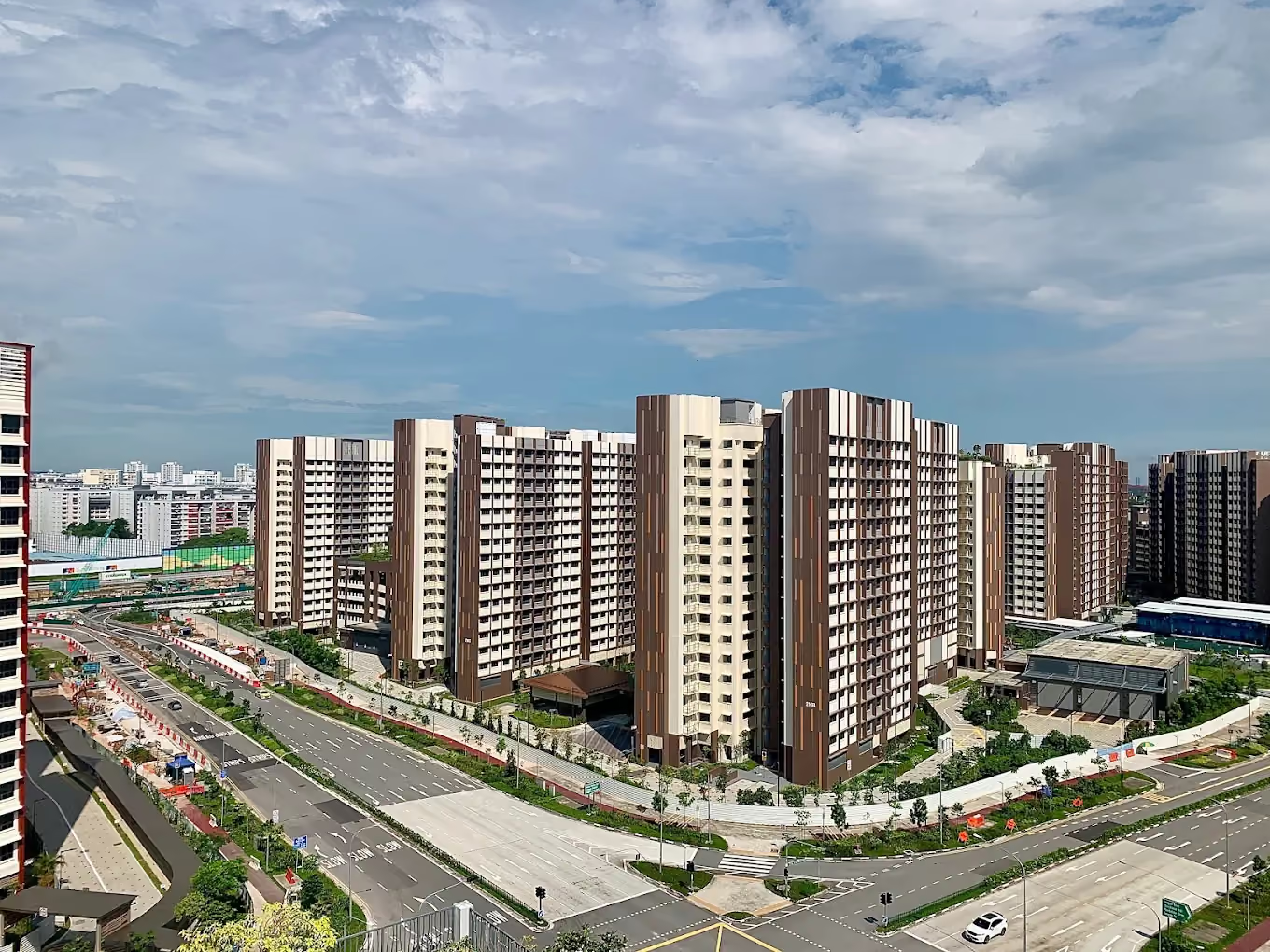
Property Type & Space Planning
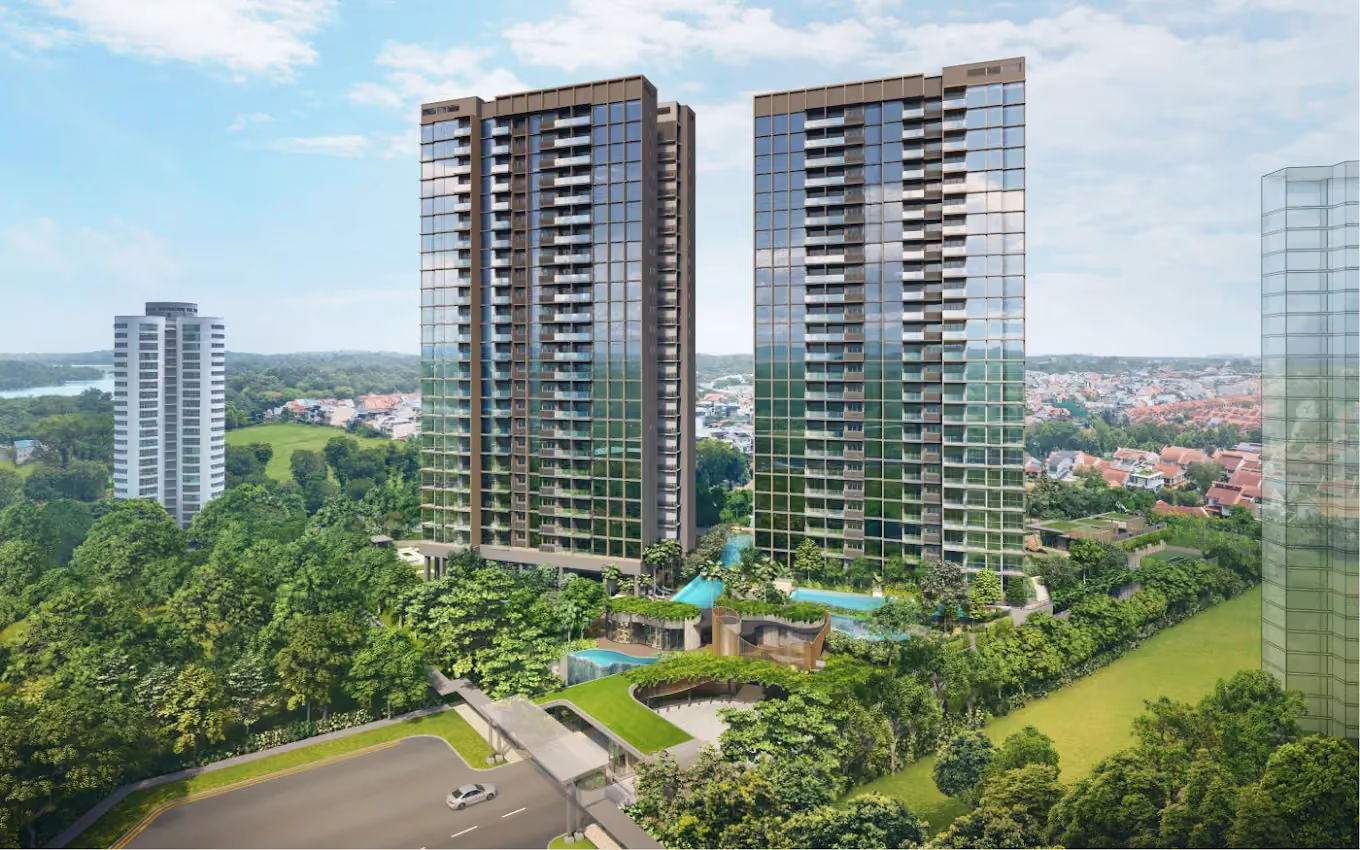
UrbanVille @ Woodlands Renovation

It depends on flat size. S$50,000 comfortably covers a 3-room BTO renovation and sits at the lower end of typical budgets for a 4-room flat, usually requiring some trade-offs in carpentry scope.
It depends on flat size. S$50,000 comfortably covers a 3-room BTO renovation and sits at the lower end of typical budgets for a 4-room flat, usually requiring some trade-offs in carpentry scope.
It typically covers a full kitchen, bathroom finishes, electrical works, flooring, painting, and custom carpentry in one or two priority rooms, with simpler solutions used elsewhere.
Decorative elements are usually cut first — full false ceilings, premium natural stone, elaborate feature walls, and fully custom carpentry in low-use rooms like storerooms or guest bedrooms.
Yes. Since OCS costs are added to the flat's purchase price and can be financed through a housing loan, opting in for basic flooring, doors and sanitary fittings can free up cash for other renovation priorities.
Fifty thousand dollars sounds like a lot of money, until you start pricing out a full home renovation. For a BTO flat, whether S$50,000 is "enough" depends heavily on flat size, how much customisation you want, and how disciplined you're willing to be about where the money goes.
This guide breaks down what a S$50,000 budget genuinely covers, where it comfortably stretches, and where most homeowners find they need to compromise.
✅ Key Takeaway: A S$50,000 budget comfortably covers a 3-room BTO renovation and sits at the lower-to-mid range for a 4-room flat. For a 5-room BTO, S$50,000 usually means scaling back carpentry and finishes significantly, since full customisation across a larger floor area typically pushes costs closer to S$55,000–S$85,000. Industry data on 4-room BTO renovations puts the average cost closer to S$50,000–S$60,000, which is why staying under S$50,000 typically requires deliberate trade-offs rather than happening by default.
Planning a BTO renovation around a firm S$50,000 cap? Start with Luxior’s renovation cost calculator, then share your floor plan and priorities on WhatsApp for a more realistic first conversation.

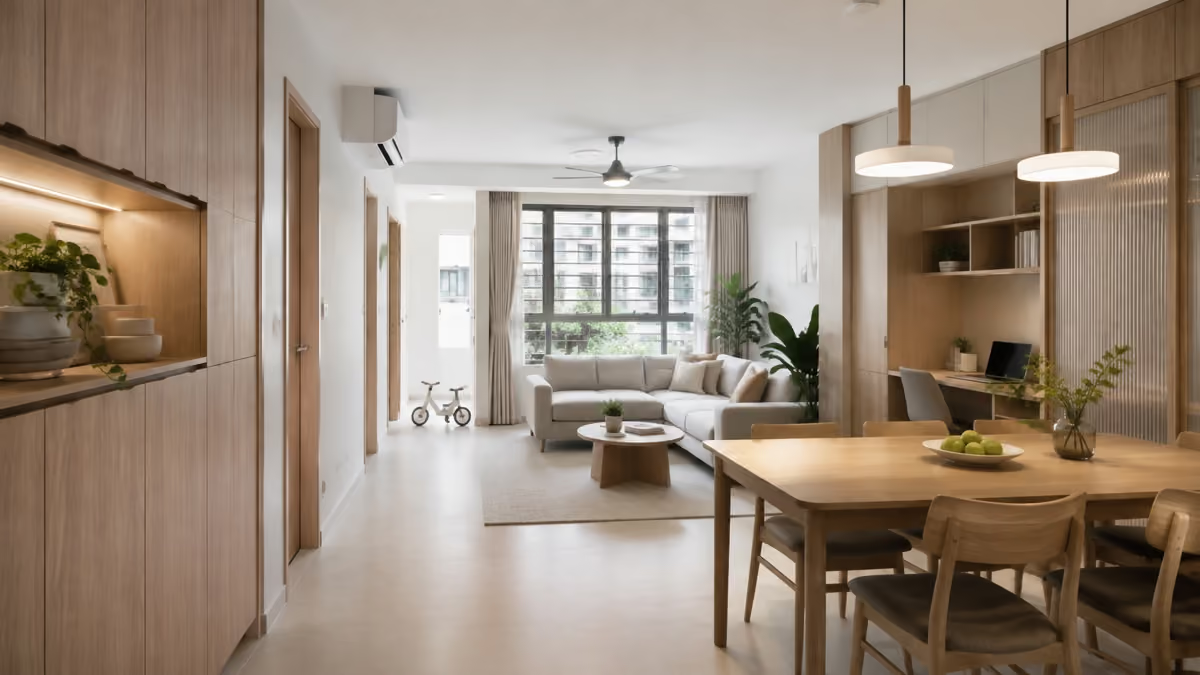
3-Room BTO (typical range S$35,000–S$55,000): A S$50,000 budget sits near the top of this range, meaning most homeowners can afford full custom carpentry in the kitchen and at least one bedroom, decent mid-range flooring throughout, a properly finished bathroom, and standard electrical and painting works — without needing to cut corners.
4-Room BTO (typical range S$45,000–S$70,000): S$50,000 is workable but requires planning. It usually covers the essentials well — kitchen, bathrooms, electrical, flooring, painting — but full custom carpentry in every room (living, all bedrooms, storage) may need to be scaled back to semi-custom or modular solutions in lower-priority spaces.
5-Room BTO (typical range S$55,000–S$85,000): S$50,000 is below the typical range. It's still possible, but usually means limiting full custom carpentry to one or two key rooms, using simpler finishes elsewhere, and treating some rooms with a lighter touch rather than a full design overhaul.
Since a BTO's electrical wiring, plumbing and structural finishes are already new, your S$50,000 doesn't need to cover demolition or rectification the way a resale flat would. That means your entire budget can go toward design and functionality — which is exactly why prioritisation matters so much.
Kitchen (S$10,000–S$25,000): This is where most households spend the most time and where poor planning is hardest to fix later. Prioritise functional cabinetry, durable countertops, and adequate storage over purely decorative finishes.
Bathrooms (S$6,000–S$12,000 per bathroom): Vanity, tiling and fittings. Since waterproofing is already new in a BTO, this budget goes almost entirely into finishes rather than rectification.
Electrical works (S$1,500–S$3,000): Additional power points and lighting circuits for your actual usage — home office setups, kitchen appliances, entertainment systems.
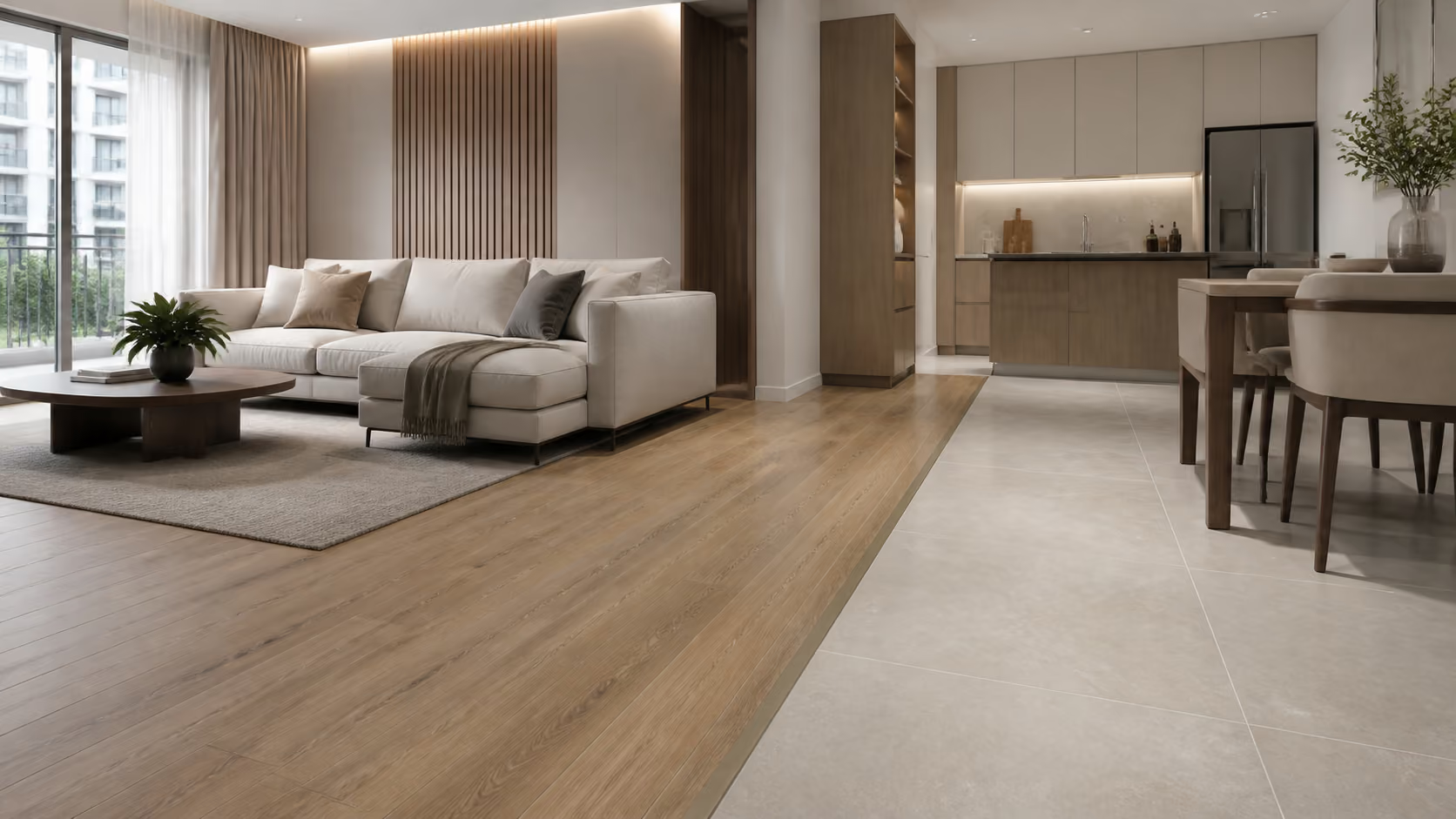
Flooring (S$4,000–S$15,000): Vinyl and laminate options offer strong value here; natural materials like marble or engineered wood cost significantly more for a similar visual effect in most lighting conditions.
Carpentry (the largest line item, typically S$10,000–S$50,000): This is where budgets get stretched thin or blown entirely, and where the biggest savings opportunities also live.
✅ Designer Insight: Homeowners who list out their must-have storage needs before meeting a designer — rather than during the design process — tend to end up with more efficient carpentry layouts and fewer costly mid-project additions.
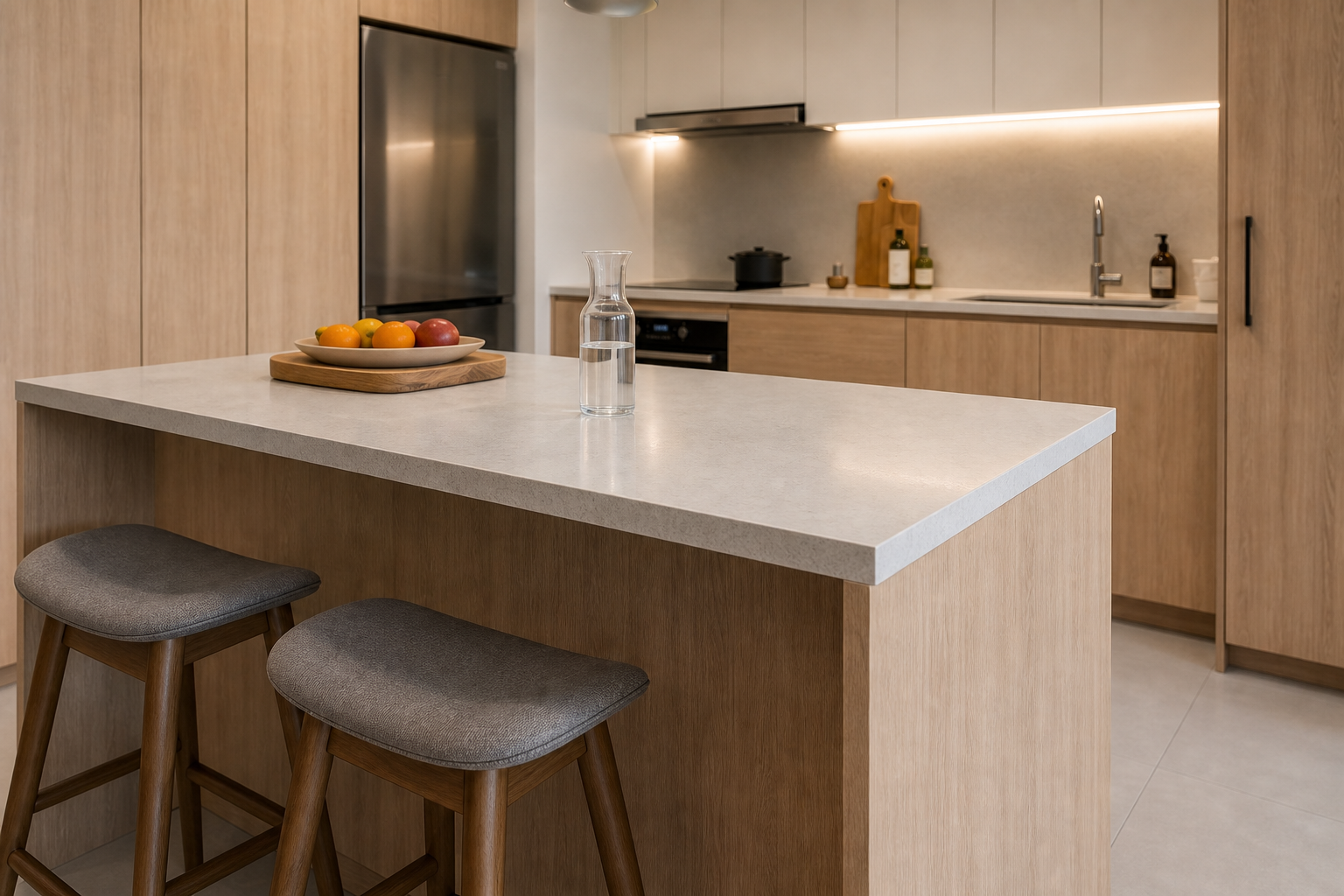
Choose semi-custom over fully custom carpentry in secondary rooms. Full bespoke carpentry throughout every room adds up fast. Reserve fully custom builds for the kitchen and master bedroom, and consider semi-custom or modular systems for guest rooms, storerooms, or secondary storage.
Use the HDB Optional Component Scheme (OCS) strategically. Since OCS costs are bundled into your flat price rather than paid in cash, opting in for basic flooring, doors, or sanitary fittings can meaningfully reduce your cash renovation outlay — provided you're comfortable with the standard finish options available.
Limit structural changes. Since a BTO starts as a blank slate, resist the temptation to hack walls or reconfigure layouts purely for aesthetic preference. Structural changes add cost without improving day-to-day function if the existing layout already works.
Standardise tile and material sizes. Custom-cut tiles, unusual layouts, and imported materials all add labour cost. Standard sizes in mid-range materials achieve a similar look for considerably less.
Prioritise function over statement pieces. A well-planned kitchen with efficient storage will serve you better long-term than an elaborate feature wall that eats into your carpentry budget.
Once the budget is set, map it to the rooms that matter most. Explore our Kitchen, Living Room and Master Bedroom ideas, or see how Luxior approaches HDB BTO interior design before deciding where to spend.
Looking at real 4-room BTO renovations that have come in under S$50,000, a few clear patterns show up again and again — regardless of design style.
Leaving spare bedrooms largely untouched. The single biggest cost-saver across budget-conscious renovations is deferring work on junior bedrooms entirely, limiting spend there to electrical points, flooring, and paint, and skipping built-in carpentry until a later phase.
Furnishing with loose pieces instead of built-ins. Homes that lean on carefully chosen freestanding furniture — rather than wall-to-wall custom carpentry — consistently report lower final costs, since loose furniture avoids the labour-intensive carpentry premium.
Retaining original HDB-provided fittings. Keeping standard-issue doors, windows, and sanitary fittings instead of upgrading them frees up budget for areas that matter more day-to-day, like the kitchen.
Keeping the original flooring. Where the as-built flooring is in good condition, skipping a full re-floor is one of the more painless ways to trim several thousand dollars.
Partial rather than full bedroom merges. Rather than fully hacking a spare bedroom's wall to merge it with the living area, some homeowners open up only a corner or section — gaining a more spacious communal area without the full cost of a complete reconfiguration.
Phasing the renovation. For younger homeowners in particular, splitting the renovation into two stages — essentials now, extensive carpentry and upgrades a few years later once more budget is available — is a common and practical way to stay under a firm cap at move-in.
✅ Designer Insight: The homes that come in well under budget aren't necessarily the ones with the least design intention — they're usually the ones where the homeowner decided early which rooms genuinely needed full treatment on day one, and which could comfortably wait.

Even with a clear S$50,000 target, certain patterns push budgets over the line consistently:
Over-customising low-use areas like storerooms or utility spaces with the same level of carpentry detail as the kitchen. Applying premium finishes uniformly across the whole home instead of concentrating spend on high-use areas. Requesting unnecessary electrical or plumbing changes purely for future-proofing, when the existing BTO layout already works well. Adding scope mid-project — an extra feature wall here, upgraded hardware there — without revisiting the overall budget as each addition comes in.
✅ Designer Insight: The single most common budget-breaker we see isn't one big decision — it's a series of small "while we're at it" additions that each seem minor but collectively add thousands to the final bill.
/(Image 4 — optional, a simple cost/budget-themed graphic if you have one, or skip this image)
Here's roughly how a S$50,000 budget for a 4-room BTO tends to break down across categories:
Kitchen: approximately S$14,000. Bathrooms (2): approximately S$14,000. Electrical: approximately S$2,500. Flooring: approximately S$7,000. Painting and ceiling: approximately S$3,500. Carpentry top-up beyond the kitchen: approximately S$7,000. Air-conditioning: approximately S$4,000. Buffer and miscellaneous: approximately S$2,000.
This is illustrative, not a quotation — actual allocation depends heavily on your design priorities and which rooms you choose to fully customise versus simplify.
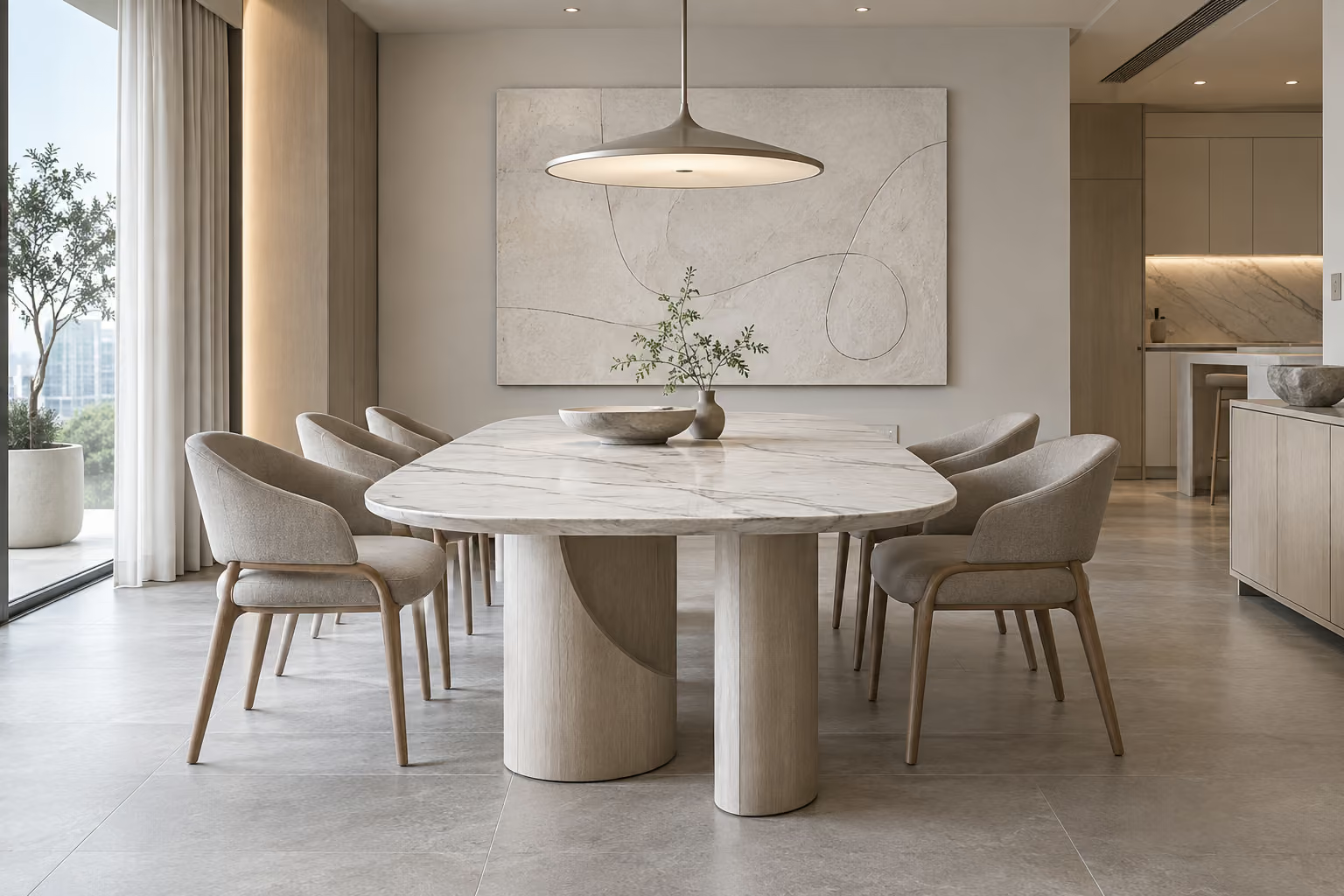
At S$50,000, especially for a 4-room flat, certain popular additions usually get scaled back or cut: a full false ceiling across every room, elaborate TV feature walls with integrated lighting, premium natural stone surfaces in place of engineered alternatives, walk-in wardrobes with full custom fittings, and fully fitted carpentry in guest bedrooms or storerooms.
None of these are essential to a functional, well-designed home — they're typically the first things trimmed when working toward a firm budget, and the ones most homeowners find they don't miss once living in the space.
Since OCS costs are added to your flat's purchase price rather than paid as a separate cash renovation invoice, they can be financed through your housing loan and paid using CPF — unlike a renovation contractor's bill, which usually requires cash or a separate renovation loan.
For flat types where OCS packages (flooring, doors, sanitary fittings) run roughly S$5,000–S$7,000, opting in can free up a meaningful chunk of your S$50,000 cash budget for carpentry and design elsewhere. The trade-off is limited choice — OCS finishes come in a fixed range of HDB-standard colours and materials.
Most banks in Singapore offer renovation loans of up to six times your monthly income, capped at a fixed amount, which typically comfortably covers a S$50,000 budget for most dual-income households. It's worth comparing rates across a few banks before committing to your renovation firm's recommended financing partner, since processing fees and rates can vary.
Applying for loan pre-approval before finalising your design brief helps you understand your actual ceiling before design discussions begin, rather than adjusting the design mid-process to fit financing constraints.
Setting a target budget without a contingency buffer, leaving no room for even minor scope changes. Choosing a renovation firm based purely on the lowest quotation without checking what's actually included. Finalising a design brief before understanding financing limits, leading to late-stage cuts that feel rushed rather than planned. Underestimating how quickly small additions — an extra shelf here, upgraded hardware there — add up across a full home. Not separating "must-have" from "nice-to-have" early, which makes it harder to trim scope cleanly if costs run over.
A S$50,000 renovation budget isn't about doing less — it's about being deliberate with where the money goes. For most 3-room and many 4-room BTO flats, it's genuinely achievable without the finished home feeling compromised, as long as priorities are set clearly from the start rather than adjusted reactively once costs start climbing.
Not sure how your specific flat and priorities fit within a S$50,000 budget? Our team can walk through your unit and give you a realistic cost estimate before you commit to anything.
Book a Free Consultation 👉 or message us directly on WhatsApp.
At S$50,000, especially for a 4-room flat, a full false ceiling across every room, elaborate TV feature walls with integrated lighting, premium natural stone in place of engineered alternatives, walk-in wardrobes with full custom fittings, and fully fitted carpentry in guest bedrooms or storerooms usually get trimmed first. None of these are essential to a functional, well-designed home.
For an initial planning range, use Luxior’s renovation cost calculator, then confirm which rooms and carpentry elements matter most within your cap.




.avif)