Property Type & Space Planning
UrbanVille @ Woodlands Renovation
Start 2 to 3 months before your expected TOP date — that's enough runway to compare materials properly instead of defaulting to whatever looks most different from your old flat.
Two to three months before TOP gives you enough time to plan deliberately, rather than making rushed comparisons against your previous flat's finishes.
Yes. Any hacking, waterproofing, structural drilling, or changes affecting common property require MCST approval before work begins. Most MCSTs also require a renovation deposit and proof of contractor insurance, so it's worth submitting paperwork as early as possible.
Most units take between 10 and 14 weeks for a full renovation, plus 2 to 3 weeks upfront for design and MCST approval. Total time from key collection to move-in is realistically 3 to 4 months.
The most costly mistakes are rushing material decisions under time pressure, skipping proper waterproofing in wet areas, and choosing lower-grade carpentry boards that swell or delaminate in Singapore's humidity within one to two years.
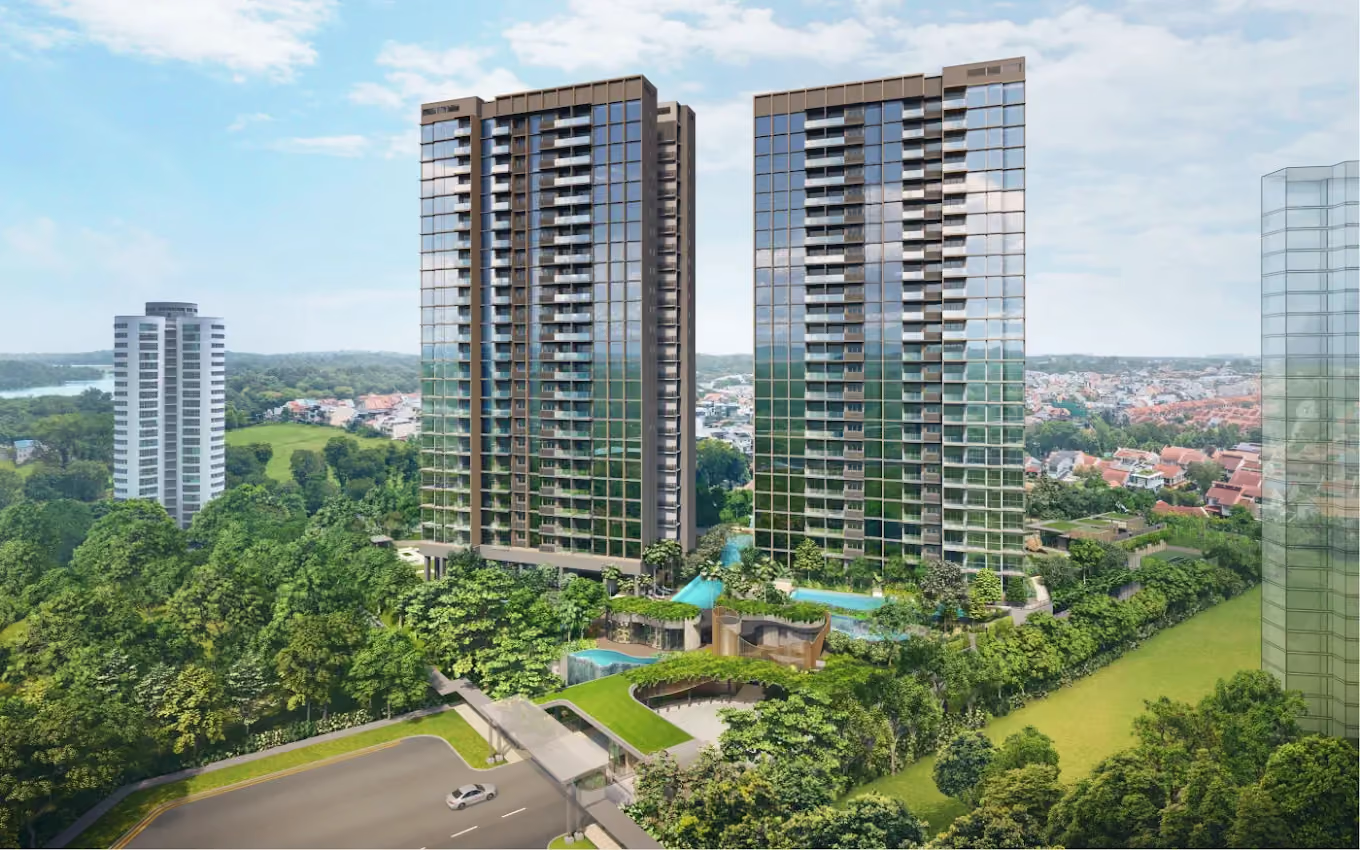
If you've secured a unit at AMO Residence, you're moving into one of Ang Mo Kio's more closely watched handovers this year, a 372-unit development in a mature estate that's home to some of the most established HDB neighbourhoods in Singapore. Many new owners here are upgrading from a resale flat just a few streets away, which brings a specific expectation: after years in an older home, the new unit needs to feel like a genuine step up, not just a change of address.
Planning your AMO Residence renovation? Send us your floor plan, expected TOP or key date and renovation scope on WhatsApp, and we’ll help map the design, MCST and procurement decisions before handover.
This guide walks through what actually matters in the months around your TOP, written specifically for owners collecting keys at a development like AMO Residence, not a generic condo renovation checklist.
AMO Residence sits in District 20, within one of Singapore's most established mature estates. Owners here are often upgrading from a resale HDB flat nearby, sometimes one they or their parents have lived in for decades, and many want their new home to feel noticeably more refined without losing the practical, family-friendly character of the neighbourhood they already know.
That upgrade mindset brings a common trap. Because many owners here are comparing this renovation against a much older flat's finishes, they sometimes over-invest in surface-level upgrades and under-invest in the planning and lead time that actually determines how the finished home performs day to day.
Let's do the math plainly, because most owners are never shown it clearly enough.
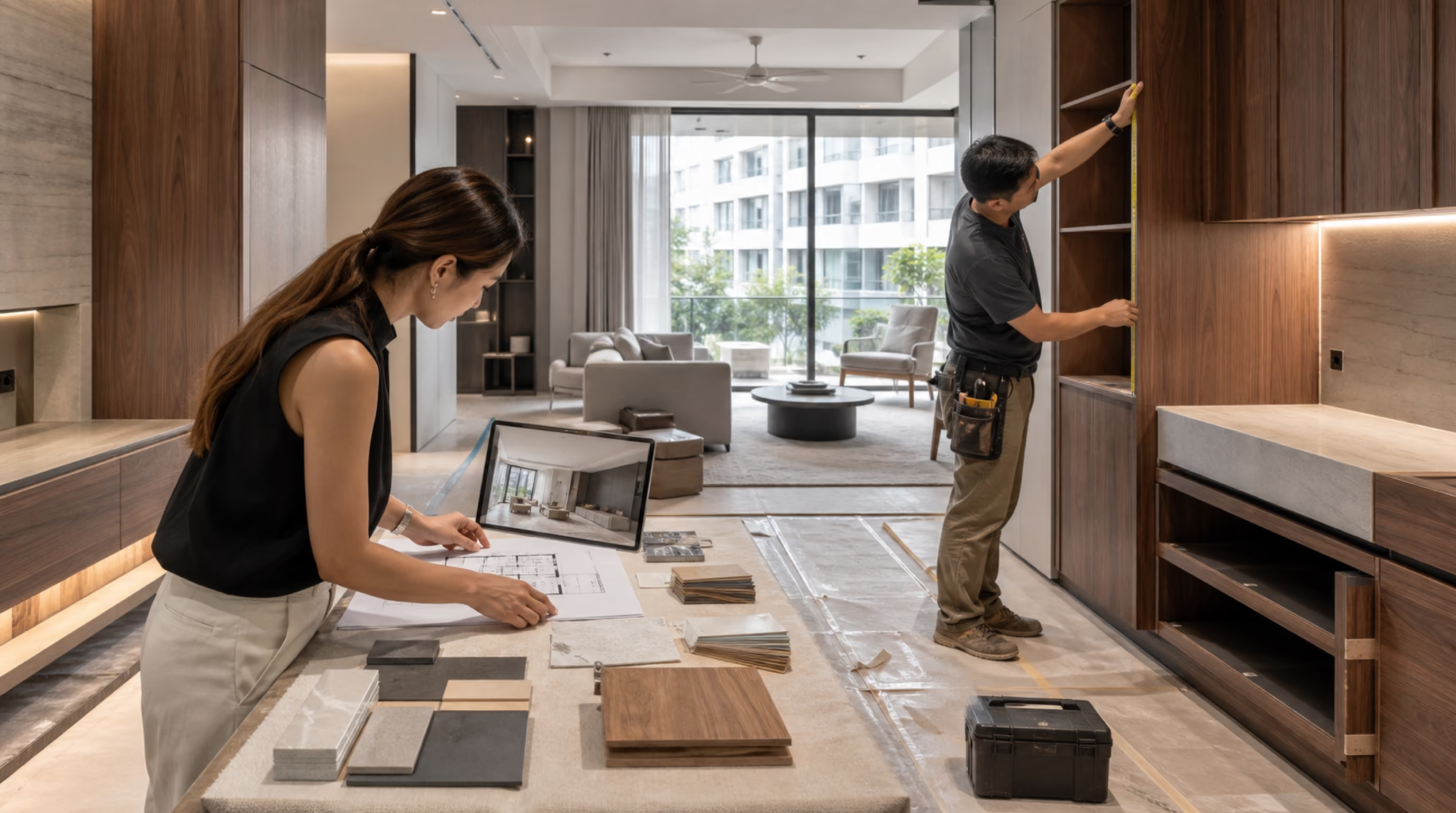
From the day you collect your keys, a full condo renovation, including carpentry, electrical, flooring, painting, and any wet-area works, typically takes 10 to 14 weeks for a unit in AMO Residence's size range. Add another 2 to 3 weeks before that for design confirmation, material selection, and MCST permit approval, which cannot start until you have legal access to the unit.
That means a realistic total window, from key collection to comfortably moving in, is closer to 3 to 4 months, not the 4 to 6 weeks many first-time condo owners assume based on what they saw with friends renovating HDB flats.
Here's the practical implication: if AMO Residence's TOP lands in late 2026 as currently projected, an owner who starts planning only after collecting keys is very likely renovating into the new year. An owner who starts design consultations and material selection now, while construction is still being finalised, can realistically be settled in well before that.
This is where we need to be direct, because it's the single most expensive mistake we see new condo owners make.
Rushing a renovation decision to get it done quickly before moving in almost always costs more than it saves. We've seen this pattern repeatedly with new owners moving into condos across Ang Mo Kio and the wider North-East corridor: a homeowner under time pressure accepts the first quotation that fits their timeline, skips proper waterproofing checks in the kitchen and bathroom, or chooses a laminate finish that looks identical to a better one in a showroom, only to find it swelling or delaminating within 18 months in Singapore's humidity.
The rectification cost for swollen carpentry or failed waterproofing is rarely small. Reworking a single kitchen carcass that's absorbed moisture can cost 30 to 50 percent of what the original cabinetry cost, on top of the disruption of living around new construction work in a home you've already moved into. Our article on common renovation mistakes Singapore homeowners should avoid covers several more of these patterns in detail.
The homes that hold up well over time are almost never the ones renovated fastest. They're the ones where material decisions were made with enough lead time to actually compare options, not just accept whatever was available on short notice.
Unlike an HDB flat, where renovation permits are handled through HDB's own portal, a condo renovation at AMO Residence goes through the Management Corporation Strata Title, or MCST, and this is where we see the most avoidable delays.
Common works that require MCST approval before they begin include:
Most MCSTs also require a refundable renovation deposit, proof of contractor insurance, and a defined working-hours window, typically excluding Sundays and public holidays, and often restricted on weekdays too. If your contractor isn't used to working within an MCST's specific house rules, delays here can eat weeks off your timeline before a single cabinet is installed.
A renovation partner who has coordinated MCST submissions before will usually have the paperwork ready before you've even finished selecting materials, which is the kind of overlap that actually protects your total timeline.
Want to avoid a handover rush? Share your MCST requirements, quotation and target move-in date with Luxior on WhatsApp so approvals, materials and site work can be sequenced realistically.
Singapore's humidity is not a footnote in material selection. It's one of the most decisive factors, and it's the one most new owners are never properly warned about.
A few concrete examples worth knowing before you sign off on materials:
None of this is exotic knowledge, but it's rarely explained clearly at the point where a homeowner is comparing two similar-looking quotations, where the cheaper one has simply substituted a lower-grade material without saying so directly.
Developments like AMO Residence tend to prioritise efficient, family-friendly layouts, which is a genuine advantage if the space is planned with intention, and a genuine frustration if it isn't.
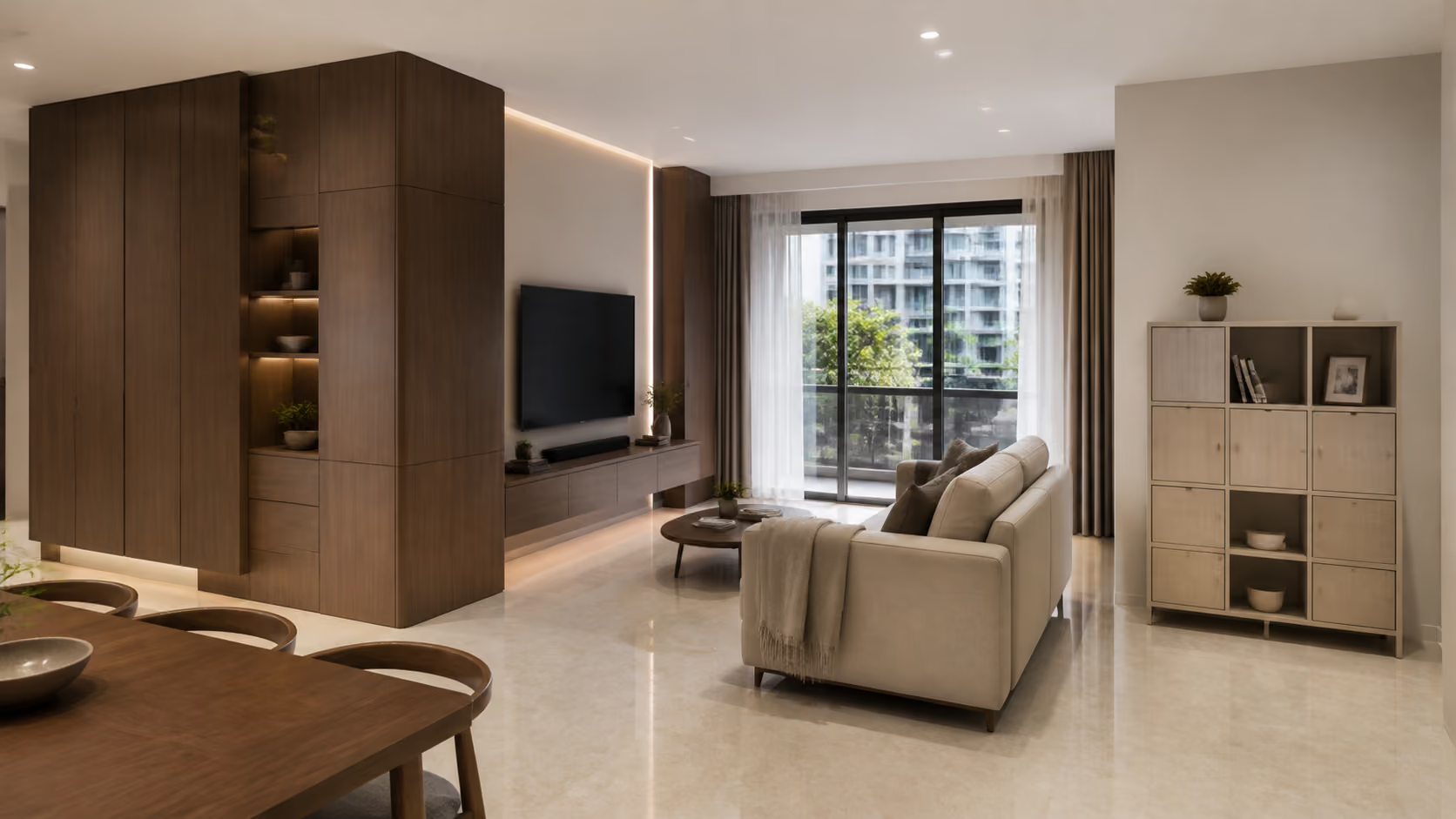
The layouts that feel most spacious after renovation typically share three things in common. First, full-height carpentry rather than standard-height cabinets, since the vertical space above a standard wardrobe or kitchen cabinet is usually wasted. Second, an open sightline from the entrance through to the living and dining area, achieved by avoiding unnecessary partition walls. Third, concealed storage integrated into existing structural elements, such as a false wall along a bomb shelter or a service duct, rather than bulky standalone furniture competing for floor space.
This is also where neuroaesthetics is worth understanding, not as a design buzzword, but as a practical principle: research on spatial perception consistently shows that visual clutter and broken sightlines increase perceived stress in a space, while clean horizontal lines and consistent material palettes reduce it, which is precisely why a well-planned unit can feel calmer than a poorly planned unit twice its size.
We'll be direct about this, because it's the part of the process that causes the most homeowner regret after the fact: the cheapest quotation on paper is rarely the cheapest renovation in practice.
When comparing quotations for a unit at AMO Residence, check for these specifics rather than the bottom-line number alone:
At Luxior Concept, every line item in our quotations is detailed upfront: material grade, brand where relevant, and scope, specifically so you're never caught off guard by a variation order mid-project. We'd rather lose a quote comparison on price than win one by leaving something out.
The owners who plan early are the ones who get to make considered choices instead of pressured ones. Starting the conversation about design and materials now, even before your exact TOP date is confirmed, is what separates a calm renovation from a rushed one.
Because we deliberately keep our project slate small enough to give each home proper architectural oversight, rather than running as many renovations as possible in parallel, our calendar for new condo handovers fills up well ahead of each TOP wave. Booking a Spatial Discovery Session with our team now means walking through your unit layout, realistic budget range, and timeline together, well before you're under pressure to decide anything.
At Luxior Concept, every quotation itemises the exact material grade, relevant brand, and scope of work for each line, rather than grouping costs into broad categories. That's deliberate — it's how we avoid mid-project surprises. More detail on our approach is at https://www.luxior.com.sg/about.
For an initial planning range, use Luxior’s renovation cost calculator, then confirm the assumptions against your condo scope, MCST requirements and target move-in date.



.avif)