Property Type & Space Planning
UrbanVille @ Woodlands Renovation
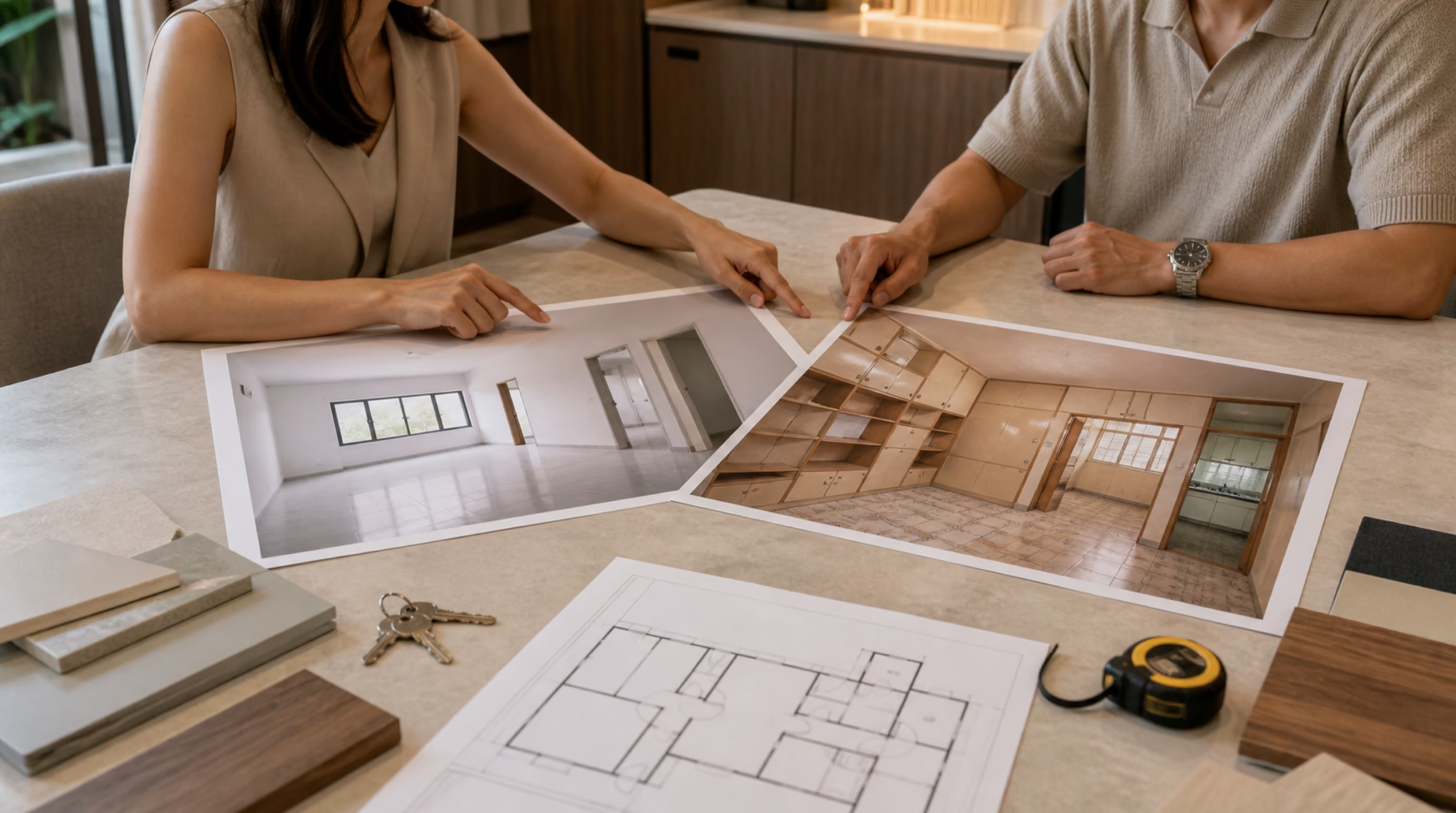
A resale HDB flat generally costs more to renovate than a BTO flat. Resale units usually need demolition, rewiring and fresh waterproofing before design work begins, which can add S$10,000 to S$20,000 to the total renovation cost compared to a new BTO.
A resale HDB flat generally costs more to renovate than a BTO flat. Resale units usually need demolition, rewiring and fresh waterproofing before design work begins, which can add S$10,000 to S$20,000 to the total renovation cost compared to a new BTO.
Resale renovations typically cost S$10,000 to S$20,000 more than a BTO renovation of the same flat size, mainly due to demolition, rewiring, re-tiling and waterproofing works that a new BTO doesn't require.
Resale flats often come with existing cabinets, tiles, wiring and waterproofing that have aged or no longer meet current standards. These need to be removed or upgraded before new design work can begin, unlike a BTO which starts with new systems and finishes.
It's possible if the resale flat is relatively new or was well-renovated by the previous owner, requiring minimal demolition, rewiring or waterproofing renewal. In most cases, however, resale renovations cost more than BTO renovations.
Every homeowner planning a renovation in Singapore eventually asks the same question: is it cheaper to renovate a brand-new BTO flat, or a resale HDB? Resale flats almost always cost more — but the reasons why, and by how much, catch a lot of homeowners off guard. Understanding this difference upfront saves you from budgeting surprises halfway through your project.
Comparing a new BTO with a resale flat? Start with Luxior’s renovation cost calculator, then share your property details and floor plan on WhatsApp so the estimate reflects the work your home actually needs.
Key TakeawayResale HDB flats typically cost S$10,000 to S$25,000 more to renovate than a BTO flat of the same size, mainly because of demolition, rewiring, re-tiling and waterproofing works that a new BTO simply doesn't need. Flat age plays a major role too — a 5-year-old resale unit and a 25-year-old resale unit can carry very different renovation bills, even at identical square footage.
Quick Answer: Does a BTO or resale flat cost more to renovate?A resale HDB flat generally costs more to renovate than a BTO flat. A BTO's electrical wiring, plumbing and structural finishes are new, so your budget goes straight into carpentry, flooring and design. A resale flat usually needs demolition of existing fixtures, hacking of old tiles, fresh waterproofing and rewiring before any new design work can start — preparatory work that alone can add S$10,000 to S$25,000 to the total renovation cost.
When homeowners compare renovation quotations, they often assume the price difference between two flats of the same size comes down to design choices. One of the biggest factors is actually far simpler: whether the flat is a new BTO or a resale unit.
A BTO flat starts with a blank slate. The wiring is new, the plumbing hasn't been touched, and the walls and floors are in their original condition. A resale flat has history — a previous owner's cabinets, tiles, wiring and finishes that usually need to be removed before any new renovation work can begin.
Two flats of identical size, in similar estates, can have renovation quotations that differ by tens of thousands of dollars purely because one is new and one isn't. Without understanding why, it's easy to assume a renovation firm is overcharging when they're actually just pricing in real, necessary preparatory work.
This guide breaks down exactly where the cost difference comes from, what each flat type typically costs to renovate in 2026, how flat age and Singapore's climate factor into the decision, and how to budget realistically depending on which one you own. For a full room-by-room cost breakdown of a typical HDB renovation, our guide on HDB Renovation Cost Singapore 2026 covers each area of the home in depth.

The price gap between BTO and resale renovations isn't about square footage — it's about condition. Four things typically drive resale costs higher.
Demolition and disposal. Resale flats usually come with existing kitchen cabinets, wardrobes, tiles and sometimes false ceilings that need to be torn out before renovation can start. Demolition and debris disposal alone can add S$1,500 to S$4,000 depending on how much needs to come out.
Rewiring. Older flats often have wiring that no longer meets current standards, especially units that are 15 to 20+ years old. Full rewiring, new distribution boards and additional power points can add S$3,000 to S$6,000 that a BTO simply doesn't need.
Re-tiling and waterproofing. Bathroom and kitchen waterproofing has a limited lifespan, typically degrading noticeably after 10 to 15 years in Singapore's humid climate. In older resale flats, redoing waterproofing before laying new tiles is common — and strongly recommended — to avoid leaks that are expensive to fix once the new tiles are down. This alone can add S$2,000 to S$5,000 per wet area.
Structural rectification. Some resale flats need wall repairs, ceiling rectification, or fixing uneven flooring left behind by the previous owner's renovation. These aren't glamorous line items, but they're necessary before any design work makes sense.
✅ Designer Insight: In many resale HDB projects, our team finds that the original waterproofing membrane is the single most underestimated line item. Homeowners focus on tile colour and layout, but skipping a proper waterproofing renewal is one of the most expensive mistakes to correct after the fact — sometimes requiring the removal of brand-new tiles just to access the membrane underneath.
Not all resale flats are the same, and lumping them together under one "resale premium" is misleading. The age of the flat — and how well it was maintained or previously renovated — has a major effect on your final renovation cost.
Flats aged 5 to 10 years typically need the least additional work. If the previous owner's renovation was done reasonably well, wiring and waterproofing may still be sound, and you may only need cosmetic updates. Renovation costs for this age group often sit close to BTO pricing, sometimes only S$3,000 to S$8,000 higher.
Flats aged 10 to 20 years usually need moderate rectification. Waterproofing membranes are approaching or past their typical lifespan, and wiring may not support modern appliance loads. Expect renovation costs S$10,000 to S$15,000 higher than an equivalent BTO.
Flats aged 20+ years often need the most extensive preparatory work. Wiring is frequently outdated, waterproofing has almost certainly degraded, and layouts may reflect older design standards that no longer suit modern living. Renovation costs for this group can run S$15,000 to S$25,000 or more above BTO pricing, particularly if hacking and structural rectification are required.
✅ Designer Insight: One common issue we encounter in flats over 20 years old is outdated distribution boards that can't safely support modern appliance loads — think simultaneous air-conditioning, induction hobs and multiple smart home devices. Homeowners are often surprised this isn't a cosmetic upgrade but a genuine safety requirement.
💡 Quick Tip: Before signing any renovation contract for a resale flat, ask your designer to do a site visit and inspection first, rather than quoting purely off photos or a floor plan. Hidden issues like pipe corrosion, uneven flooring or outdated wiring are often only visible on-site, and catching them early avoids costly surprises mid-renovation.
Here's how BTO and resale renovation budgets typically differ, category by category.
Kitchen. BTO kitchens usually only need cabinetry, countertops and finishing works, costing around S$10,000 to S$25,000. Resale kitchens often need demolition of old cabinets, replumbing and sometimes electrical rerouting first, pushing costs to S$15,000 to S$30,000.
Bathroom. A BTO bathroom renovation typically costs S$6,000 to S$12,000 for vanity, tiling and fittings. A resale bathroom, once you add waterproofing renewal and possible pipe rerouting, usually runs S$8,000 to S$15,000 per bathroom.
Electrical works. New BTOs rarely need more than additional power points and lighting circuits, at roughly S$1,500 to S$3,000. Resale flats needing a full rewire can cost S$3,000 to S$6,000 or more.
Flooring. Flooring costs are fairly similar between BTO and resale, at S$4,000 to S$15,000 depending on material — but resale flats sometimes need floor levelling first if the existing surface is uneven, adding a few hundred to a couple of thousand dollars.
Ceiling and painting works. BTO flats generally only need a fresh coat of paint and optional false ceiling installation, at around S$2,000 to S$6,000. Resale flats may need ceiling rectification to fix water stains, cracks or uneven surfaces left behind by the previous owner, which can add S$1,000 to S$3,000 on top of standard painting and ceiling costs.
Air-conditioning. Both BTO and resale flats typically require new aircon installation unless the previous owner's system is being retained, at around S$3,000 to S$8,000 depending on the number of rooms. Resale flats occasionally need additional trunking work if the existing conduit layout doesn't match the new design.
Carpentry. This is where both flat types spend the most, and the cost is largely similar between BTO and resale — S$10,000 to S$50,000 depending on how much built-in storage you want. Carpentry cost is driven by design choices, not the flat's history.
✅ Designer Insight: From our experience, homeowners who compare kitchen quotations without checking whether demolition and replumbing are included often end up comparing a resale quote against what is effectively a BTO-level scope. Always ask your designer to itemise demolition, replumbing and rewiring separately so you're comparing like for like.
The right service depends on what your flat needs before design can begin. Compare Luxior’s HDB BTO Interior Design and HDB Resale Interior Design approaches, then think through the rooms that matter most with our Kitchen and Living Room ideas.
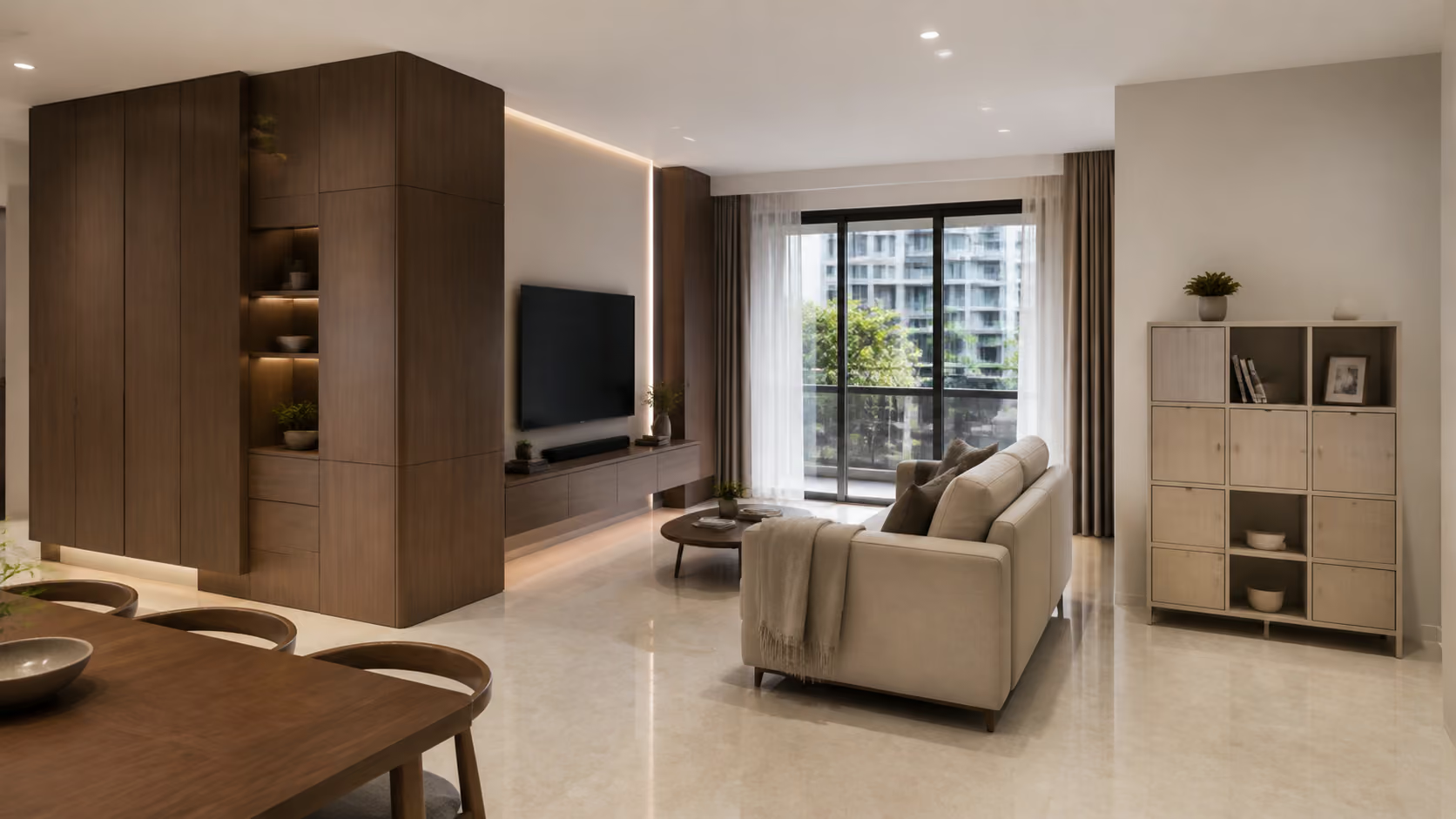
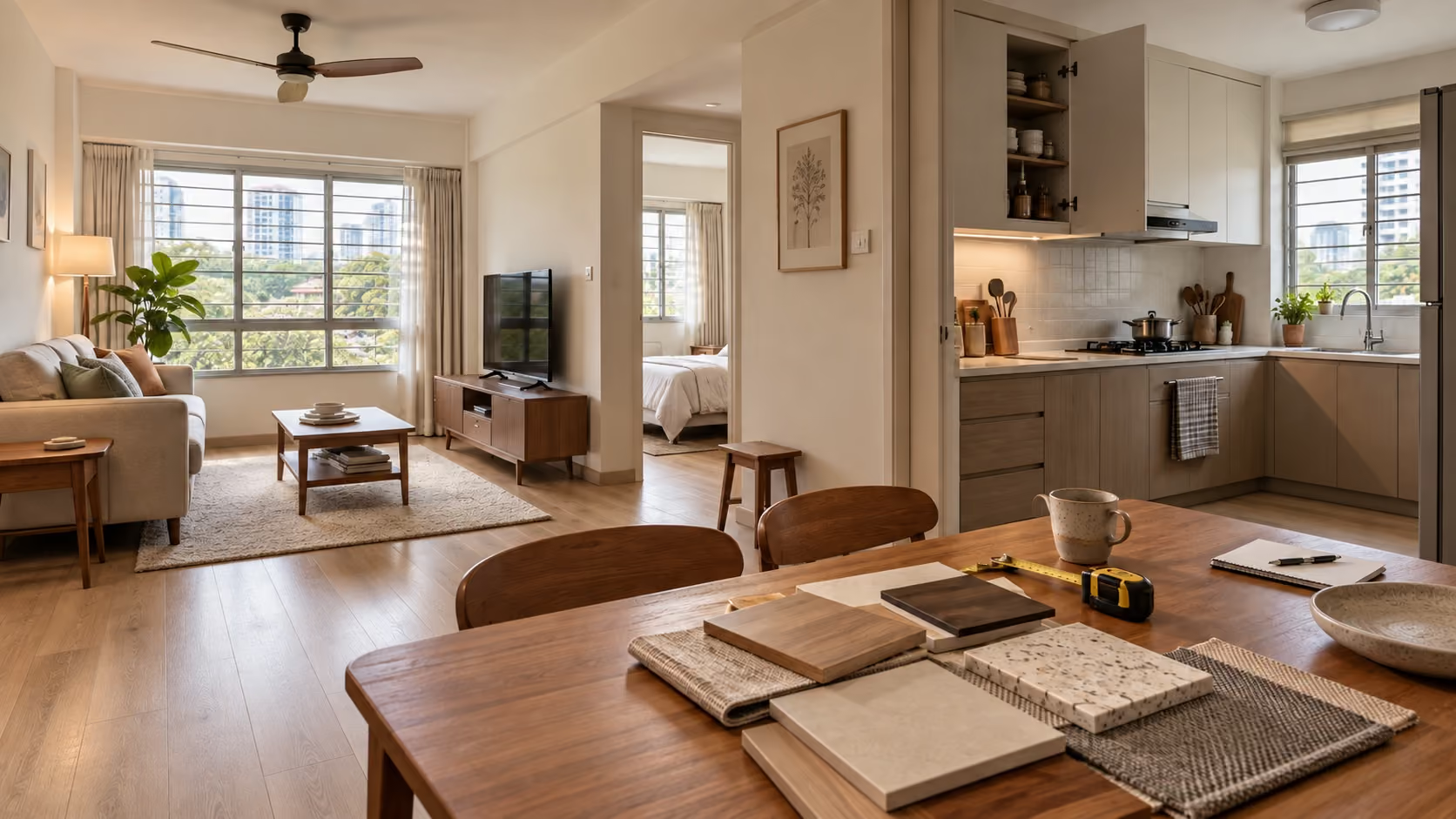
Since a BTO's structure and systems are new, most of the budget goes into design, carpentry and finishes.
If you're planning your overall budget from scratch, our guide on How to Plan a Renovation Budget in Singapore walks through how to prioritise spending by room.
One factor unique to BTO flats — and irrelevant to resale units entirely — is the HDB Optional Component Scheme (OCS). Before key collection, BTO buyers can opt to have HDB install basic finishes such as floor tiles or vinyl flooring, internal bedroom doors, and sanitary fittings, with the cost added directly to the flat's purchase price rather than paid out of pocket during renovation.
Because the OCS cost is bundled into the flat price, it can be paid using CPF funds and financed as part of your housing loan, rather than requiring cash upfront the way a renovation contractor's invoice usually does. For a 3-room flat, OCS packages for flooring, doors and sanitary fittings have historically cost in the range of S$5,000 to S$7,000 combined — a cost that would otherwise sit inside your renovation budget.
Opting into OCS can lower your initial cash renovation outlay by covering some of the most basic — and expensive to source individually — finishes before you even move in. The trade-off is design flexibility: OCS finishes come in a limited range of HDB-standard colours and materials, and if you later decide to swap them out for a different look, you'll pay to remove and replace finishes you already paid for once.
Some BTO flats built using Prefabricated Prefinished Volumetric Construction (PPVC) don't offer OCS as an opt-in choice at all — floors, doors and sanitary fittings come pre-installed as part of the build, with no option to opt out. Check with HDB during the flat selection stage whether your unit falls under this construction method.
✅ Expert Tip: If you already have a clear, defined design direction for a full custom renovation, it's often more cost-efficient to skip OCS and let your renovation firm handle flooring, doors and sanitary fittings as part of one coordinated design — rather than paying for OCS finishes now and paying again later to remove and replace them.
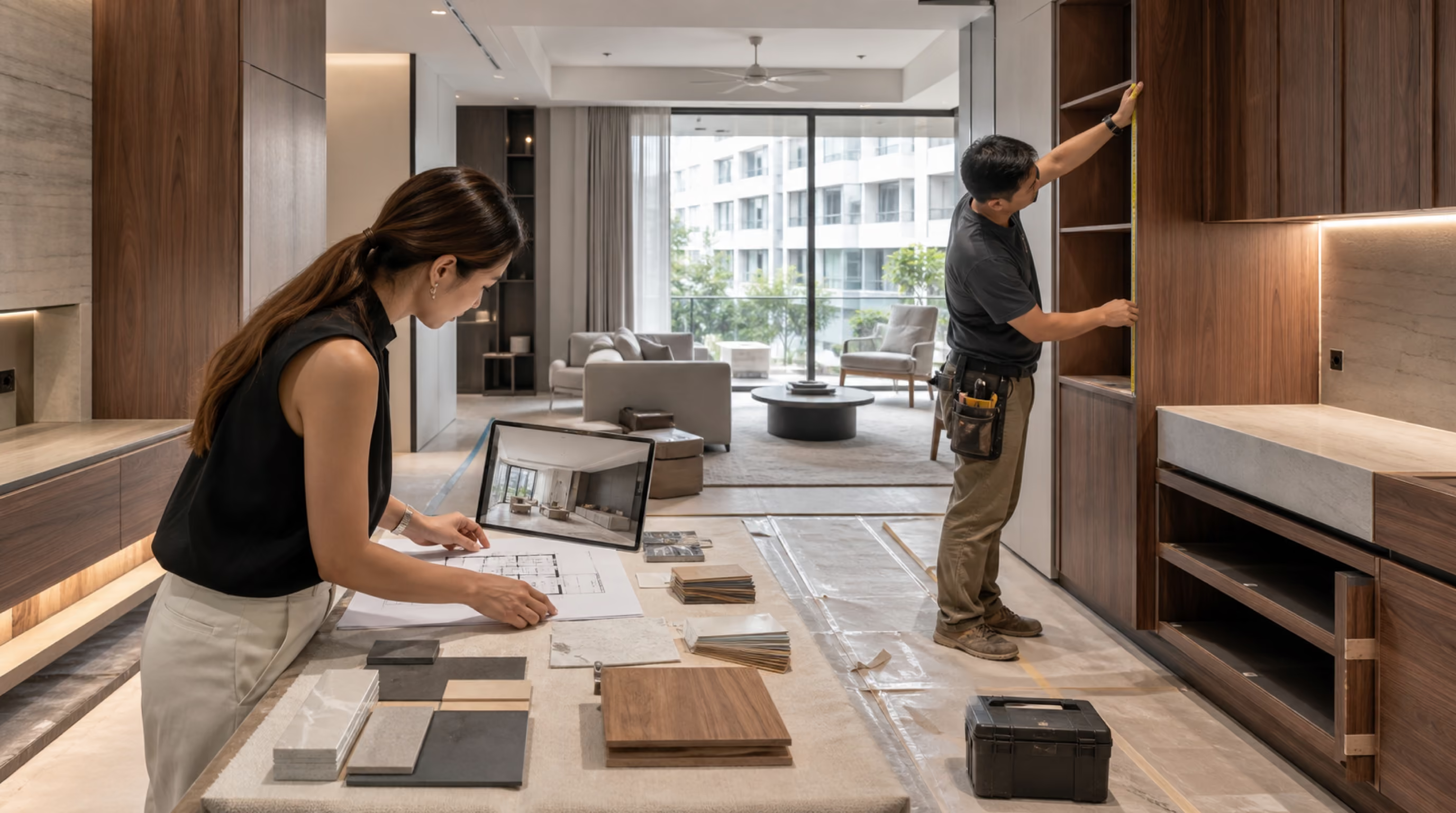
Resale flats carry the added cost of demolition, rewiring and waterproofing on top of the same design and carpentry work a BTO would need.
The exact gap between a BTO and resale flat of the same size usually comes down to how much preparatory work the resale unit needs — a flat that's only 5 years old will need far less rectification than one that's 20 years old with an outdated layout.
✅ Designer Insight: In many resale HDB projects, we find the actual renovation scope only becomes clear once demolition starts. It's worth setting aside a 10 to 15 percent contingency on top of your resale renovation quote specifically to cover discoveries like corroded pipes or degraded wiring insulation behind walls.
Singapore's tropical climate — high humidity, heavy rainfall and intense heat — affects every renovation decision, but it plays out differently depending on flat type.
In a BTO flat, waterproofing membranes in the kitchen and bathrooms are new, so mould and moisture issues are rare in the first several years, provided ventilation is adequate and finishes are sealed properly during installation. Resale flats, particularly those over 15 years old, are far more likely to already show early signs of water ingress, damp patches near window frames, or musty odours in wet areas — all indicators that waterproofing or sealant renewal is overdue.
Material choice also matters more in a humid climate than many homeowners expect. Solid timber and certain laminates can warp or delaminate over time if not properly treated for humidity resistance, while porcelain tiles, engineered quartz and moisture-resistant laminates tend to perform more reliably in Singapore's conditions. This applies equally to BTO and resale renovations, but resale homeowners replacing failed materials from a previous renovation should pay particular attention to selecting humidity-appropriate materials the second time around.
Maintenance-wise, a BTO renovated with new systems generally requires less intervention in the first 5 to 10 years. Resale flats, especially those with older air-conditioning ledges, window frames or exposed piping, often need more frequent inspection and upkeep regardless of how recently the interior was renovated.
✅ Designer Insight: One common issue we encounter in resale bathrooms is grout that looks intact on the surface but has already failed underneath due to years of humidity exposure. A simple moisture test during the pre-renovation inspection can reveal this before it becomes a costly surprise mid-project.
Certain renovation works require approval before construction begins, and the process differs slightly depending on your flat type and any structural changes involved.
For HDB flats - both BTO and resale - works such as hacking non-structural walls, altering the household shelter, changing floor finishes in wet areas, or modifying the kitchen layout typically require an HDB renovation permit. Structural walls cannot be hacked under any circumstances. Applications are usually submitted by your renovation contractor on your behalf, and approval timelines can affect your overall renovation schedule, so it's worth confirming this early with your designer.
If you're renovating a condo unit rather than an HDB flat, approval instead goes through your development's Management Corporation Strata Title (MCST), which sets its own house rules covering renovation hours, contractor access, use of common corridors for material transport, and sometimes restrictions on flooring materials for sound insulation between units. Always check your specific MCST's renovation guidelines before finalising your design, since requirements can vary significantly between developments.
Resale flats occasionally carry an added complication: unauthorised renovation works completed by a previous owner. If a wall was hacked without permit approval, or plumbing was rerouted outside of HDB guidelines, this can surface during your own renovation planning and may need to be rectified before new work proceeds — another reason a proper pre-renovation inspection matters more for resale units than for BTOs.
For the latest requirements, always check HDB's renovation guidelines directly, since renovation rules are periodically updated.
Resale renovations typically take longer than BTO renovations, not because the design work differs, but because there's more to do before design work can even start.
A standard BTO renovation usually takes 8 to 10 weeks. A resale renovation, especially one requiring hacking, rewiring and waterproofing, often takes 10 to 14 weeks. If your resale flat needs approval for structural changes, factor in additional time for permit processing before construction begins.
Demolition alone can take anywhere from 3 days to a full week in a resale flat, depending on how much needs to be removed. This is time that a BTO renovation simply doesn't need to account for, since there's nothing to tear out before the new design work begins.
💡 Quick Tip: If you're renovating a resale flat, build in a buffer of at least 2 extra weeks beyond your contractor's estimated timeline. Older flats often reveal issues — like hidden pipe corrosion or uneven flooring — only once demolition begins.
Because resale renovations typically cost more, financing considerations differ slightly between the two. Most banks in Singapore offer renovation loans of up to six times your monthly income, capped at a fixed amount, regardless of whether your flat is a BTO or resale unit.
However, since resale renovation budgets tend to run S$10,000 to S$25,000 higher, resale homeowners are more likely to need financing to cover the full renovation cost, rather than paying entirely out of savings. It's worth comparing renovation loan rates and terms across a few banks before committing to your renovation firm's recommended financing partner, since rates and processing fees can vary. An independent comparison portal such as MoneySmart's renovation loan guide is a useful starting point for checking current rates before you apply.
Whichever flat type you own, it's good practice to apply for loan pre-approval before finalising your renovation quotation, so you know your actual budget ceiling before design discussions begin.
Homeowners often ask whether spending more on a resale flat's renovation actually pays off when it comes time to sell. The honest answer is that it depends more on what you renovate than how much you spend.
Structural and functional upgrades - rewiring, waterproofing renewal, and well-planned storage - tend to hold their value because they address real buyer concerns during resale viewings. Highly personalised design choices, such as unusual colour schemes or heavily customised layouts, don't always appeal to the next buyer and rarely return their full cost at resale.
For BTO flats, since the underlying systems are already new, renovation spend generally goes toward aesthetics and functionality rather than necessary rectification — meaning the "value protection" argument matters less, since there's little structural risk to begin with.
✅ Designer Insight: From our experience, resale flat buyers evaluating a unit for purchase pay close attention to visible signs of proper waterproofing and electrical work, even if they can't articulate exactly what they're looking for. A well-executed, unglamorous renovation often reassures a future buyer more than an elaborate feature wall.
Resale renovations don't have to blow the budget if you're strategic about where money goes.
Keep existing plumbing points in place wherever possible, since relocating sinks, toilets or washing machine points adds unnecessary labour cost. Reuse structurally sound elements like solid flooring if it's still in good condition rather than replacing it purely for aesthetics. Ask your renovation firm to inspect wiring before assuming a full rewire is necessary — sometimes only partial rewiring is needed, which can save several thousand dollars. And prioritise waterproofing and rewiring over decorative upgrades — these are the elements that are expensive and disruptive to fix later, unlike paint or furniture, which can always be updated over time.
It's also worth asking whether existing built-in furniture, such as a wardrobe or kitchen cabinet in good condition, can be retained or refurbished rather than replaced entirely. A reface or repaint of existing carpentry is often significantly cheaper than a full replacement, while still achieving a refreshed look.
✅ Designer Insight: One common issue we encounter is homeowners assuming a full carpentry replacement is necessary when the existing cabinet boxes are structurally sound. A refacing job — new doors, hardware and countertop on existing carcasses — can save 30 to 40 percent compared to full replacement, provided the underlying structure isn't water-damaged.
Ironically, BTO homeowners sometimes end up overspending in different ways — usually by over-customising areas that don't need it. Common overspending patterns include excessive carpentry in low-use areas like storerooms, premium finishes applied uniformly across the whole home instead of focused on high-use areas like the kitchen and bathroom, and unnecessary hacking or structural changes purely for aesthetic preference on a flat that was already move-in ready.
Another common pattern is over-planning for flexibility that isn't needed. Some BTO homeowners request extensive rewiring or plumbing changes purely for future-proofing, even when the existing layout already works well for their lifestyle. Since a BTO's systems are already new, this kind of speculative change often adds cost without meaningfully improving day-to-day living.
If you're still deciding how much custom carpentry your home actually needs, our cost calculator can give you a quick estimate to work from.
Whether you're renovating a BTO or resale flat, these mistakes come up repeatedly and can meaningfully affect your final cost and outcome.
Assuming a lower resale quotation means better value, without checking whether demolition, rewiring or waterproofing were quietly excluded from the scope.
Underestimating how much hidden structural work a resale flat needs until demolition actually begins and issues surface behind walls or under existing tiles.
Comparing a resale flat's quotation to a BTO friend's renovation cost, without accounting for the extra preparatory work resale units require.
Skipping a proper site inspection before signing a quotation, which often leads to costly variation orders once hidden issues are discovered mid-renovation.
Underestimating timeline differences, which can lead to overlapping move-in dates, temporary accommodation costs, or rushed decision-making during the design phase.
Choosing materials without considering Singapore's humidity, resulting in warped timber, delaminated laminate, or mould-prone grout within a few years of renovation.
Overspending on decorative features while underspending on waterproofing and electrical work, which are far more expensive and disruptive to correct later than a feature wall is to update.
Forgetting to check HDB or MCST approval requirements before finalising a design, which can cause delays or force a redesign partway through planning.
Not budgeting a contingency fund, leaving no buffer when a resale flat reveals hidden issues or a BTO renovation runs into minor scope changes.
Whether you're renovating a brand-new BTO or a resale flat with years of history, the smartest approach is the same: understand exactly what you're paying for before you commit. BTO renovations let you invest almost entirely in design and carpentry, while resale renovations require balancing necessary structural work with the design vision you have in mind. Flat age, prior renovation quality, Singapore's humidity, and how much preparatory work is genuinely needed will always matter more than a quotation's headline price.
Not sure how your specific flat stacks up? Our team can walk through your unit's condition and give you a realistic cost estimate before you commit to anything.
Book a Free Consultation 👉 or message us directly on WhatsApp.
BTO renovation budgets typically run S$35,000 to S$55,000 for a 3-room, S$45,000 to S$70,000 for a 4-room, and S$55,000 to S$85,000 for a 5-room flat, since most of the spend goes into carpentry and finishes rather than preparatory work. Our guide to planning a renovation budget in Singapore walks through how to prioritise spending by room. For an initial planning range, use Luxior’s renovation cost calculator, then adjust the allowance once you know whether your flat needs additional preparation or rectification.




.avif)