Property Type & Space Planning
UrbanVille @ Woodlands Renovation
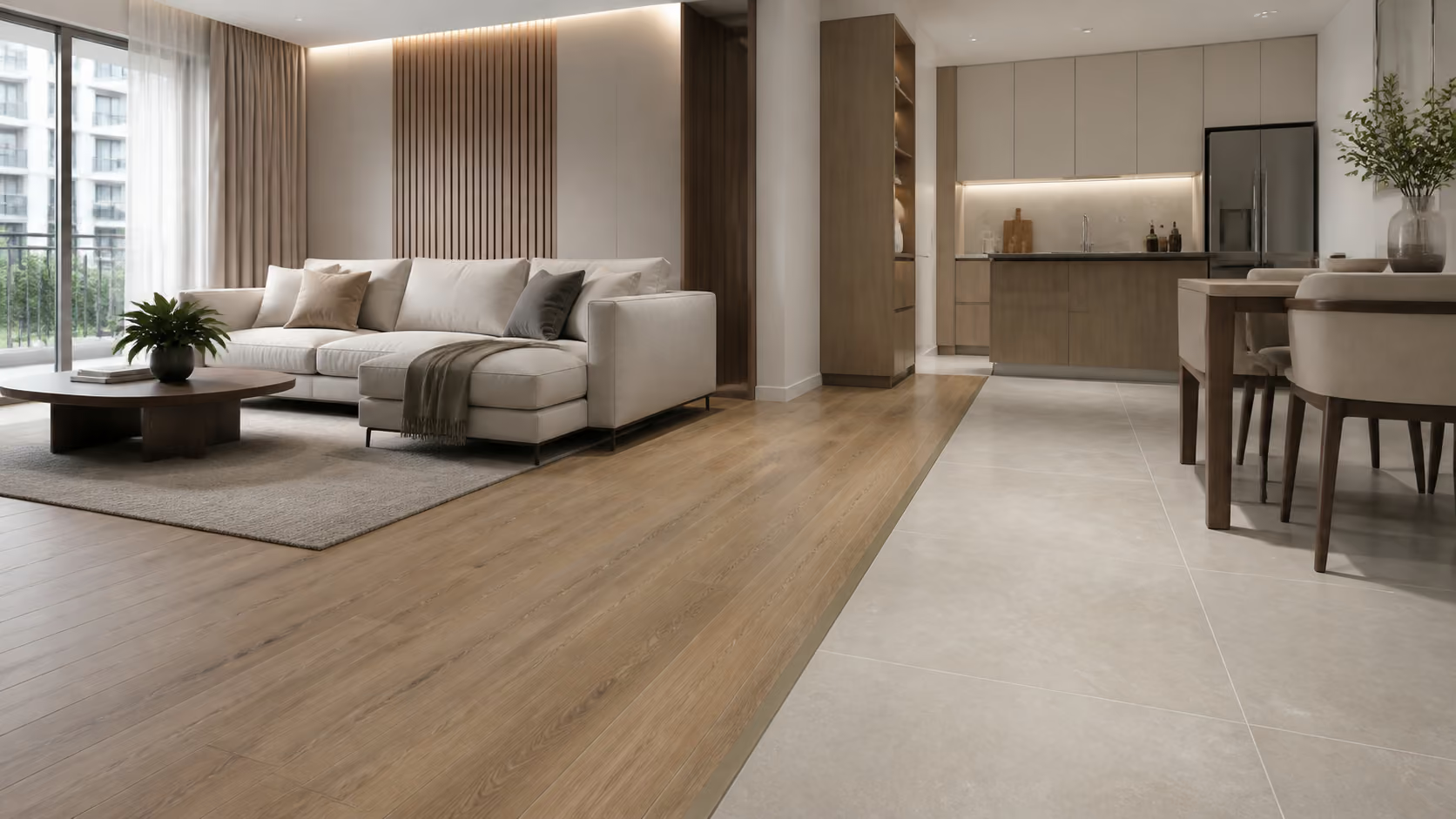
Neither is universally better — it depends on the room. Vinyl is more affordable and comfortable underfoot, suited to bedrooms and living rooms, while tiles are more water-resistant and durable, making them the better choice for kitchens, bathrooms and balconies exposed to Singapore's humidity.
Neither is universally better — it depends on the room. Vinyl is more affordable and comfortable underfoot, suited to bedrooms and living rooms, while tiles are more water-resistant and durable, making them the better choice for kitchens, bathrooms and balconies exposed to Singapore's humidity.
Vinyl flooring is generally cheaper, with standard options starting around S$3 to S$5 per square foot compared to S$6 to S$10 per square foot for porcelain tiles.
It depends on the type. SPC vinyl is generally fully waterproof due to its rigid core, while standard sheet vinyl and lower-grade LVT are water-resistant on the surface but can allow moisture penetration at seams if not installed correctly.
Vinyl flooring typically lasts 10 to 15 years depending on quality and traffic, while porcelain tiles can last 20 years or longer with proper installation and care.
Flooring is one of the first decisions homeowners face in any renovation, and it's also one of the most consequential — it affects your budget, your maintenance routine, and how your home feels underfoot for the next 10 to 15 years. In Singapore, the choice usually comes down to two contenders: vinyl flooring and tiles. Both have loyal fans, both perform differently in our climate, and the "better" option depends entirely on the room, your household, and your priorities.
Choosing between vinyl and tiles? Use Luxior’s renovation cost calculator for an initial flooring and renovation range, then share your floor plan and priorities on WhatsApp for room-specific guidance.
Key TakeawayVinyl flooring generally costs less, feels warmer underfoot, and installs faster than tiles, making it a popular choice for bedrooms and living areas. Tiles cost more upfront but offer superior durability, water resistance and longevity, making them the stronger choice for kitchens, bathrooms and high-traffic wet areas in Singapore's humid climate. Most homeowners end up mixing both, rather than choosing one flooring type for the entire home.
Quick Answer: Is vinyl flooring or tiles better for a Singapore home?Neither is universally better — it depends on the room. Vinyl flooring is more affordable, comfortable underfoot and quick to install, making it well suited to bedrooms, living rooms and dry areas. Tiles are more durable, fully water-resistant and easier to maintain in wet conditions, making them the better choice for kitchens, bathrooms, and balconies exposed to Singapore's heat and rain. Many homeowners use tiles in wet areas and vinyl elsewhere to balance cost, comfort and durability.
Ask ten homeowners in Singapore whether they prefer vinyl or tiles, and you'll likely get a fairly even split — and strong opinions on both sides. Vinyl flooring has surged in popularity over the past decade thanks to realistic wood-look designs, comfortable underfoot feel and lower cost. Tiles remain the standard for wet areas and are still favoured by many homeowners throughout the entire home for their durability and clean, cool aesthetic.
Neither material is objectively superior. Vinyl and tiles solve different problems, and the right choice depends on which room you're flooring, how your household lives day to day, and how much long-term maintenance you're willing to take on. This guide walks through cost, durability, humidity performance, comfort, maintenance and resale considerations so you can make a confident, room-by-room decision rather than a single blanket choice for the whole flat.
For a broader look at where flooring fits into your overall renovation budget, our guide on HDB Renovation Cost Singapore 2026 breaks down typical costs across every part of the home.
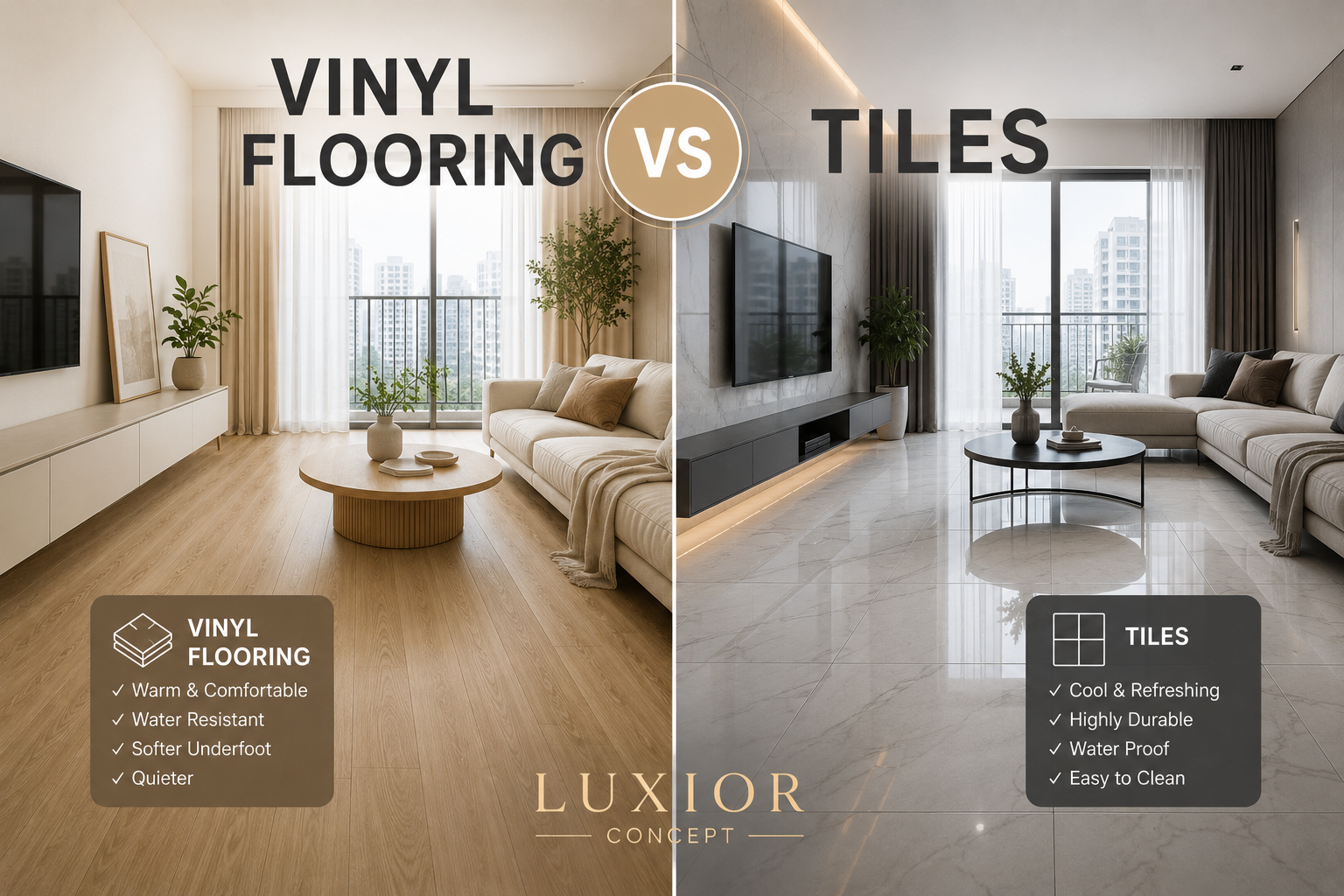
Before comparing cost and performance in detail, it helps to understand what each material actually is.
Vinyl flooring is a synthetic material made from PVC layers, available in several formats. Sheet vinyl comes in large rolls for seamless installation. Luxury vinyl tile (LVT) and luxury vinyl plank mimic the look of wood or stone in individual tiles or planks. Stone plastic composite (SPC) vinyl, increasingly popular in Singapore, has a rigid core that resists dents and temperature-related expansion better than standard vinyl.
Tiles, by contrast, are fired ceramic or porcelain material, cut into individual pieces and installed with grout lines. Porcelain tiles are denser and more water-resistant than standard ceramic tiles, and are the more common choice for Singapore homes given their durability. Natural stone tiles like marble sit at the premium end, offering a distinctive look but requiring more maintenance.
✅ Designer Insight: Our designers often find that homeowners assume "vinyl" refers to one single product, when in reality the difference between basic vinyl and SPC vinyl is significant — SPC performs noticeably better under furniture weight and daily wear, and is worth the modest price premium for most households.
Vinyl flooring costs vary depending on the format and quality tier you choose.
Standard sheet or homogeneous vinyl typically costs S$3 to S$5 per square foot including installation, making it one of the most budget-friendly flooring options available. For a typical 4-room HDB flat, this translates to roughly S$2,500 to S$4,500 for the whole home.
Luxury vinyl tile or plank (LVT) generally runs S$5 to S$8 per square foot, offering more realistic wood or stone visuals and better wear layers. A 4-room flat renovation using LVT throughout typically costs S$4,500 to S$7,500.
SPC vinyl, with its rigid core and improved durability, usually costs S$6 to S$9 per square foot, translating to roughly S$5,500 to S$8,500 for a 4-room flat.
These figures typically include basic subfloor preparation, but flats with significantly uneven existing flooring may need additional levelling work, which can add a few hundred to over a thousand dollars depending on the extent of the unevenness.
Tiles generally cost more than vinyl once you account for both material and labour, since tiling is a more labour-intensive installation process involving cutting, laying and grouting.
Ceramic tiles are the most affordable tile option, typically costing S$4 to S$7 per square foot installed. ceramics work well for lower-traffic areas but are more prone to chipping than porcelain.
Porcelain tiles, the most common choice for Singapore homes due to their durability and water resistance, generally cost S$6 to S$10 per square foot installed. For a 4-room flat, porcelain tiling throughout typically runs S$8,000 to S$14,000.
Large-format porcelain tiles and imported designer tiles can push costs to S$12 to S$20 or more per square foot, particularly for statement pieces in living areas or feature walls.
Natural stone tiles, such as marble, sit at the premium tier, often costing S$15 to S$30+ per square foot once you factor in material, cutting, sealing and specialist installation.
✅ Designer Insight: In many resale HDB projects, we find that homeowners underestimate how much tile wastage adds to the final bill — irregular room shapes, diagonal layouts and pattern-matching can increase material requirements by 10 to 15 percent above the actual floor area. Always ask your contractor to account for wastage in the initial quotation rather than discovering it as a variation order later.
Tiles are the more durable option in almost every practical sense. Porcelain tiles can last 20 years or longer with minimal wear, resist scratches from daily foot traffic, and don't degrade from sun exposure the way some materials do. Tiles are also far more resistant to sharp impacts, though a dropped heavy object can still chip or crack an individual tile.
Vinyl flooring has a shorter typical lifespan of 10 to 15 years, depending on quality and foot traffic. SPC and LVT with thicker wear layers hold up considerably better than budget sheet vinyl, but all vinyl is more susceptible to scratches from pet claws, dragged furniture, and sharp objects than tile. Vinyl can also show indentation marks from heavy furniture left in one place for extended periods.
One advantage vinyl holds over tiles: individual planks or tiles can often be replaced without redoing the entire floor, whereas replacing a single damaged ceramic or porcelain tile can be tricky to colour-match once the original batch is no longer available.
✅ Designer Insight: One common issue we encounter with vinyl flooring in Singapore homes is premature wear near entryways and under dining chairs, where repeated friction accelerates surface degradation. Choosing a higher wear-layer rating in these zones — or adding felt pads under furniture — meaningfully extends vinyl's lifespan.
This is where the two materials diverge most sharply, and it's arguably the most important factor for Singapore homeowners specifically.
Porcelain tiles are essentially waterproof once properly sealed and grouted, making them the standard choice for kitchens, bathrooms, and balconies exposed to Singapore's heavy rainfall and humidity. Tiles don't absorb moisture, don't warp, and don't support mould growth on the surface itself — though grout lines can develop mould if not cleaned and sealed periodically.
Vinyl flooring's water resistance depends heavily on the format. SPC vinyl is generally 100 percent waterproof due to its rigid core, making it suitable even for bathrooms in some installations. Standard sheet vinyl and lower-grade LVT are water-resistant on the surface but can allow moisture penetration at the seams or edges if not installed correctly, which in Singapore's humidity can eventually lead to subfloor moisture issues if left unaddressed.
Subfloor preparation matters enormously in our climate. Installing any flooring — vinyl or tile — over a subfloor with trapped moisture can cause long-term problems regardless of the flooring material's own water resistance. This is particularly relevant in resale flats where the existing subfloor condition is unknown until the old flooring is removed.
✅ Designer Insight: From our experience, homeowners renovating resale flats are often surprised to discover moisture trapped beneath old vinyl flooring once it's removed — a reminder that vinyl's surface water resistance doesn't protect against subfloor moisture issues that develop over years in a humid climate. A proper moisture reading before installing new flooring is worth the small additional cost.
Vinyl flooring has a clear advantage in comfort. It feels warmer and softer underfoot compared to the coolness of tile, which matters for households with young children who spend time playing on the floor, or anyone who prefers a cosier feel in bedrooms and living spaces. Vinyl also has some natural sound-dampening properties, reducing footstep noise compared to hard tile surfaces.
Tiles feel cool underfoot, which many homeowners actually prefer in Singapore's heat, particularly in living areas without constant air-conditioning. However, that same coolness and hardness means tiles transmit more impact sound, which becomes a real consideration in multi-storey condo living.
Tiles are generally easier to maintain in terms of surface cleaning — a simple mop with water handles most daily upkeep, and porcelain tiles resist staining well. The main maintenance consideration is grout, which can discolour over time and typically needs resealing every 1 to 2 years to prevent staining and mould growth in the lines.
Vinyl flooring is also easy to clean day-to-day, but requires slightly more care to avoid damage — abrasive cleaning tools and excessive standing water should be avoided, particularly at seams. Vinyl doesn't have grout lines to maintain, which many homeowners find is a genuine time-saver over the years.
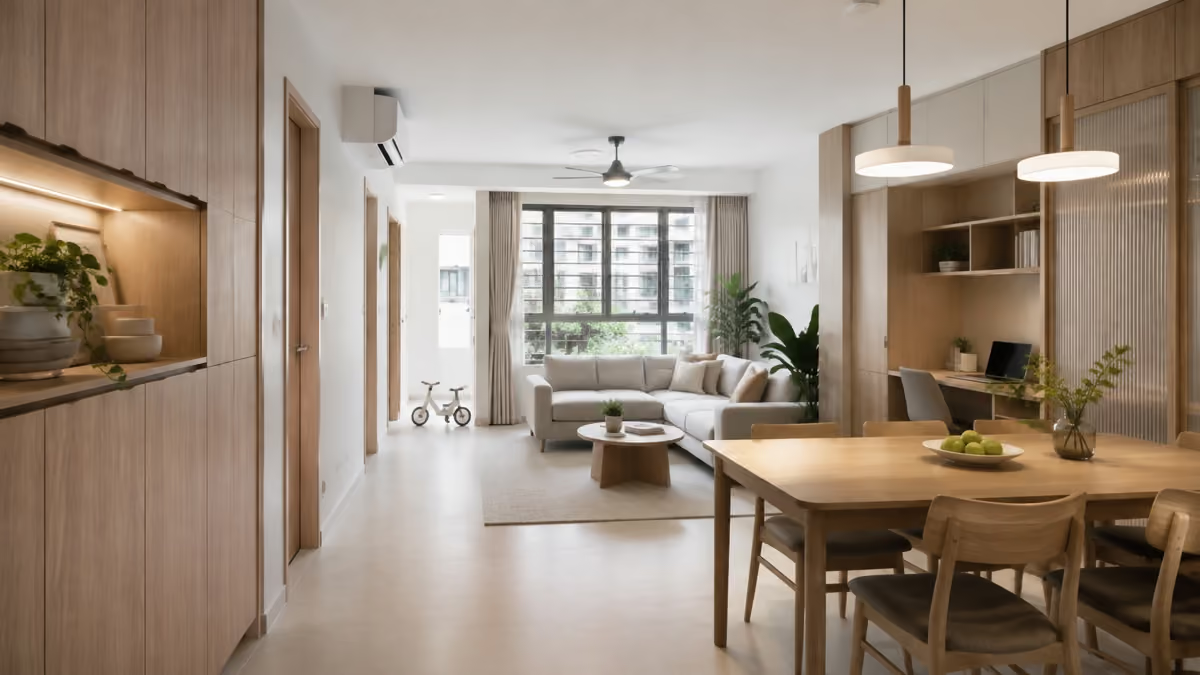
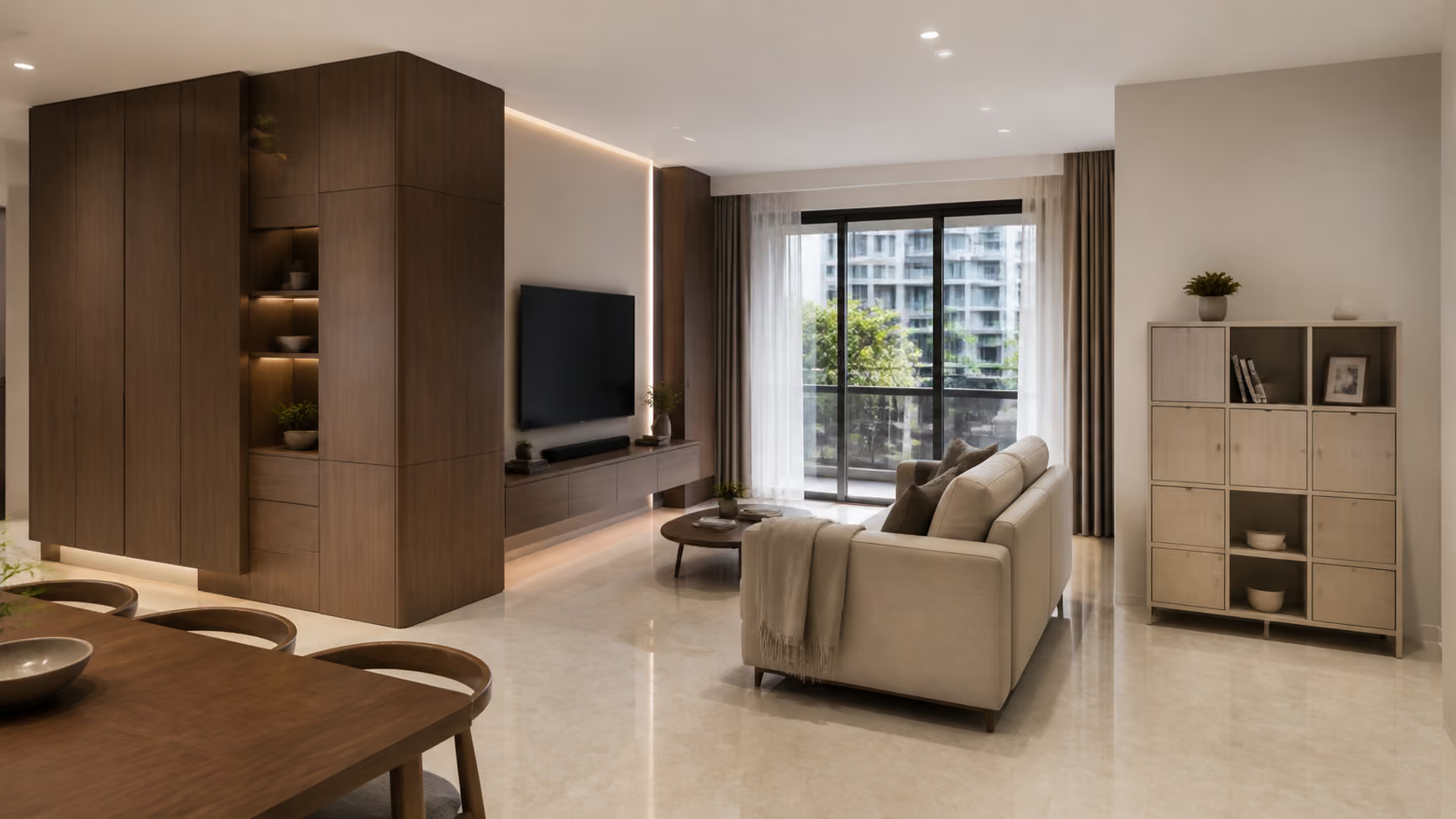
Living room and bedrooms. Vinyl is generally the better choice here, offering warmth, comfort and a wide range of wood-look designs at a lower cost than equivalent tile finishes.
Kitchen. Tiles are the safer choice given exposure to water, oil splashes and heat near the stove. SPC vinyl can work if budget is a concern, but porcelain tiles remain the more durable long-term option for this high-use area.
Bathroom. Tiles are strongly recommended for bathrooms in Singapore, given constant water exposure and the need for reliable waterproofing. This is one area where compromising on tile in favour of vinyl is rarely advisable.
Balcony and yard. Tiles are the standard choice here due to direct exposure to rain, sun and outdoor conditions that most vinyl products aren't rated to withstand long-term.
Study or home office. Vinyl works well, offering comfort for a space where you'll spend long hours seated, along with easier future updates if your workspace needs change.
Flooring works best when it follows how each room is used. Compare our Kitchen, Bathroom, Living Room and Master Bedroom ideas before choosing one material for the whole home.
For HDB flats, flooring changes in wet areas such as kitchens and bathrooms typically require notifying HDB as part of your renovation permit application, particularly if waterproofing membrane work is involved. Always confirm this with your renovation contractor before work begins.
For condo units, your development's Management Corporation Strata Title (MCST) may impose specific requirements around hard flooring, particularly relating to impact sound insulation between units. Many MCSTs require an approved underlay or sound insulation layer beneath tile or engineered timber flooring to reduce noise transmission to the unit below — this typically applies less to vinyl, given its inherent sound-dampening properties, but requirements vary by development. Always check your specific MCST's renovation guidelines before finalising your flooring choice, since non-compliance can result in required rework at your own cost.
Flooring alone rarely makes or breaks a resale sale, but it does influence a buyer's first impression and perceived maintenance burden. Well-installed porcelain tiles throughout a home are generally viewed favourably by resale buyers for their durability and low-maintenance reputation. High-quality vinyl in good condition is also well received, particularly realistic wood-look designs that suggest a warmer, more finished aesthetic.
Where flooring can hurt resale value is visible wear — scratched, dented or discoloured vinyl, or cracked and poorly grouted tiles, both signal to a buyer that maintenance has been neglected. Choosing a durable option appropriate to each room's use, and maintaining it properly, matters more for resale than the specific material chosen.
Vinyl flooring installs considerably faster than tiles. Sheet vinyl or click-lock LVT can often be installed in a single day for an entire flat, since there's no curing time required before the space is walkable. This makes vinyl a practical choice for homeowners on a tight renovation timeline.
Tile installation takes longer due to the layering process — laying, grouting, and curing time before the floor can bear normal foot traffic. A full-flat tiling job typically takes 3 to 5 days, and areas shouldn't be walked on for at least 24 hours after grouting to allow proper setting.
💡 Quick Tip: If your renovation timeline is tight, mixing vinyl in dry areas with tiles only in wet areas can meaningfully shorten your overall installation schedule compared to tiling the entire flat.
A few patterns show up repeatedly when homeowners spend more on flooring than necessary. Choosing premium large-format or imported tiles for the entire home, including low-visibility areas like storerooms, rarely delivers proportional value. Over-specifying SPC vinyl in areas with minimal foot traffic, such as guest bedrooms used infrequently, adds cost without meaningful benefit. And selecting natural stone tiles purely for aesthetic prestige, without accounting for the ongoing sealing and maintenance they require in Singapore's humidity, often leads to higher long-term costs than anticipated.
✅ Designer Insight: One common issue we encounter is homeowners defaulting to the most expensive flooring tier throughout the entire home rather than allocating budget strategically — investing in durable, higher-tier materials in high-traffic wet areas while choosing more economical options in bedrooms and low-use spaces almost always delivers better value overall.
Choosing the same flooring material for the entire home without considering that different rooms have different durability and water-resistance needs.
Ignoring subfloor moisture before installing new flooring, especially in resale flats where the previous flooring's condition is unknown.
Selecting budget vinyl for high-traffic areas, leading to premature wear and the need for replacement well before the expected lifespan.
Skipping proper underlay or sound insulation in condos, resulting in required rework to meet MCST noise transmission requirements.
Underestimating tile wastage in irregular room layouts or diagonal patterns, leading to budget overruns during installation.
Choosing natural stone tiles without factoring in ongoing sealing and maintenance, resulting in higher long-term costs than initially budgeted.
Not checking wear-layer thickness on vinyl products, resulting in flooring that looks similar in the showroom but performs very differently after a few years of daily use.
Installing tiles in bedrooms purely for a uniform look, sacrificing comfort and warmth for aesthetic consistency across the home.
Failing to confirm HDB or MCST approval requirements before finalising a flooring choice involving wet area changes or hard flooring in a condo.
Vinyl flooring and tiles both have a place in a well-planned Singapore home — the mistake isn't choosing one over the other, but applying a single material uniformly without considering how each room is actually used. Tiles earn their keep in kitchens, bathrooms and balconies where water resistance matters most. Vinyl brings warmth, comfort and cost savings to bedrooms and living spaces where daily comfort outweighs the need for full waterproofing.
Not sure which combination makes sense for your flat? Our team can walk through your layout and lifestyle to recommend the right flooring strategy room by room.
Book a Free Consultation 👉 or message us directly on WhatsApp.
Standard sheet vinyl typically costs S$3 to S$5 per square foot including installation, or roughly S$2,500 to S$4,500 for a 4-room HDB flat. Luxury vinyl tile or plank runs S$5 to S$8 per square foot. SPC vinyl, with its rigid, more durable core, usually costs S$6 to S$9 per square foot.
For an initial planning range, use Luxior’s renovation cost calculator, then compare the flooring choice with the rest of your renovation priorities.



.avif)