Property Type & Space Planning
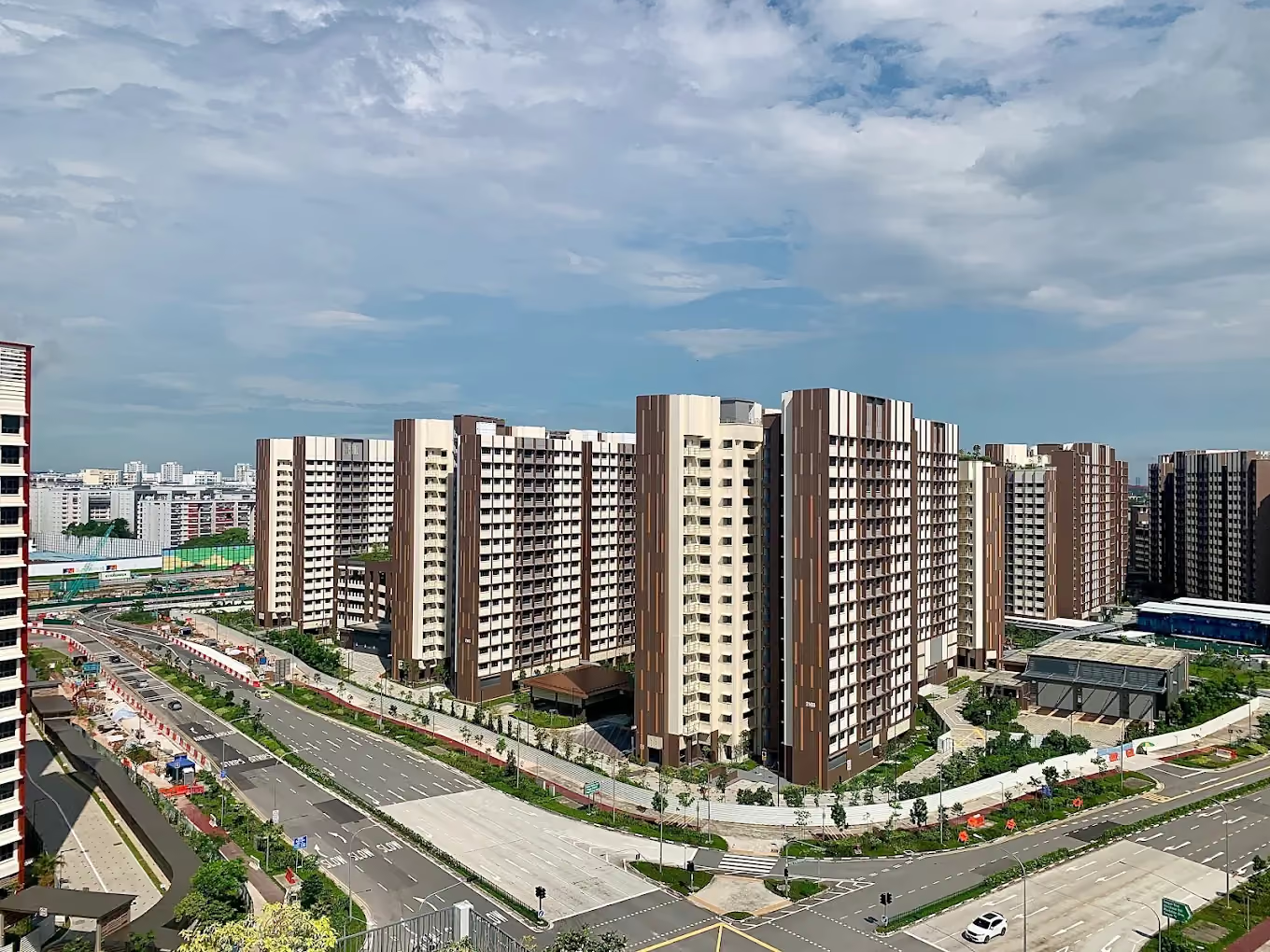
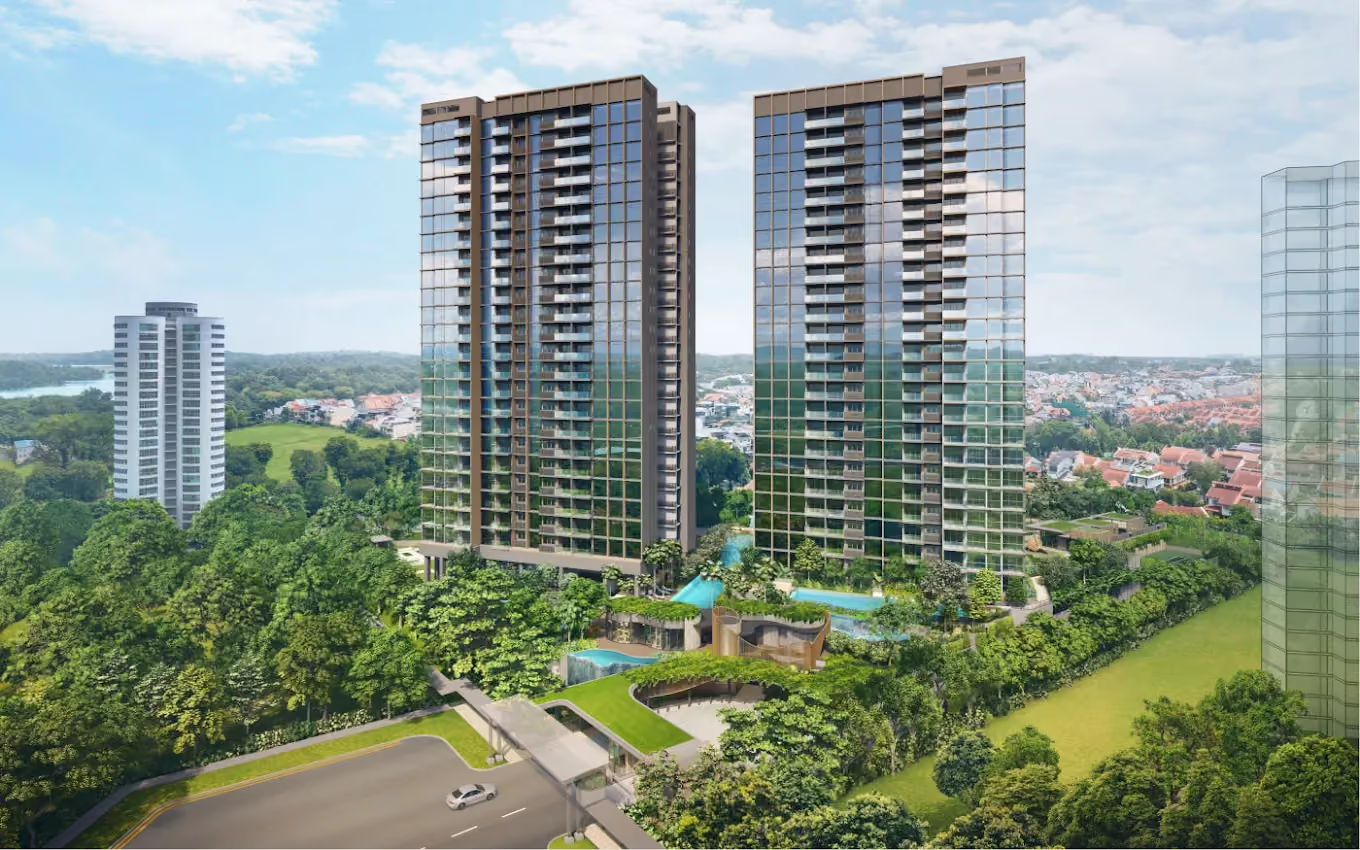
UrbanVille @ Woodlands Renovation
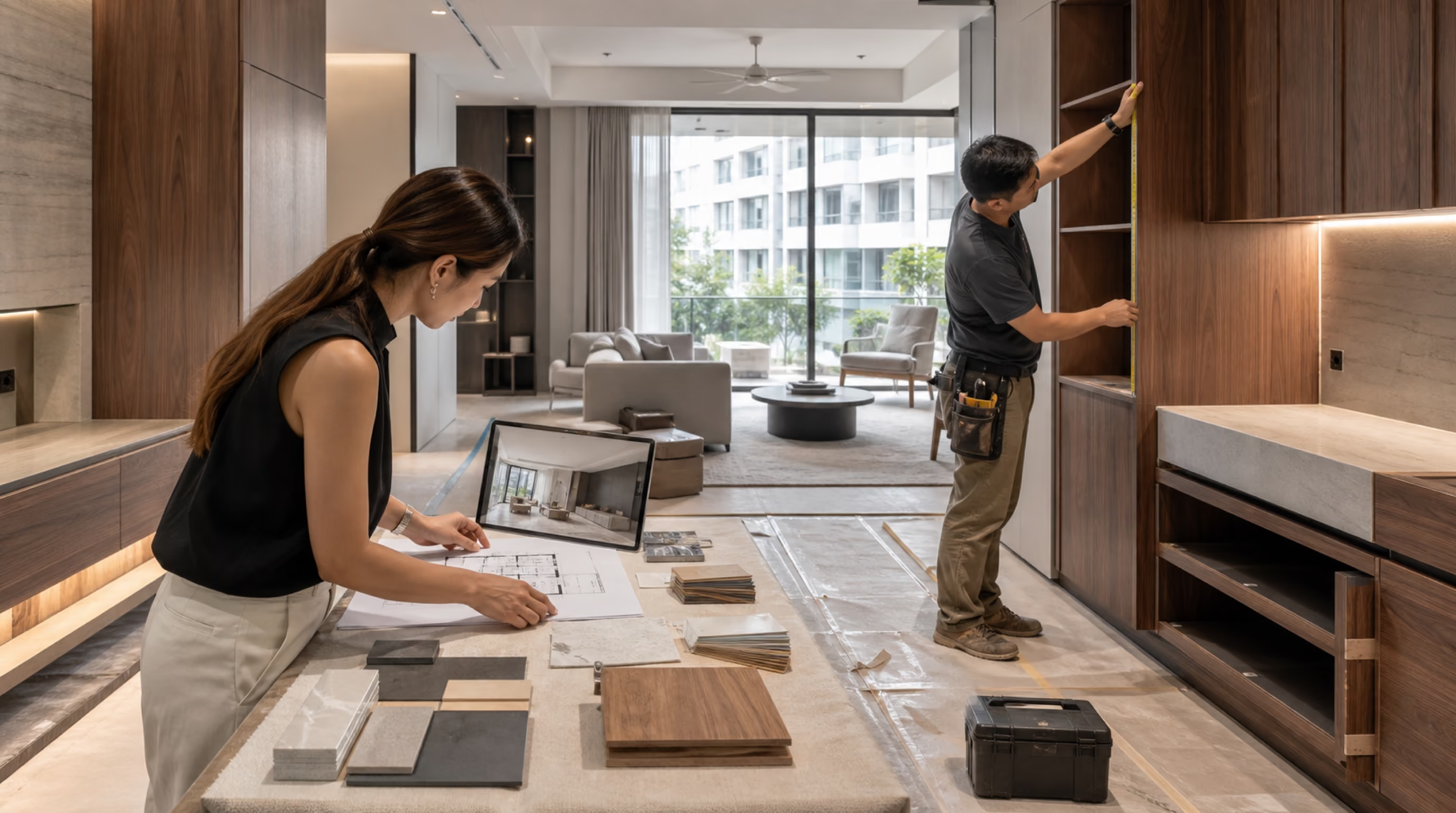
An interior designer plans the layout, aesthetic direction, material palette and overall look of your home, while a renovation contractor carries out the physical construction work — demolition, tiling, electrical wiring, plumbing and carpentry installation. Many Singapore firms today offer both services together.
An interior designer plans the layout, aesthetic direction, material palette and overall look of your home, while a renovation contractor carries out the physical construction work — demolition, tiling, electrical wiring, plumbing and carpentry installation. Many Singapore firms today offer both services together.
Generally yes, since design services add cost on top of construction, commonly 10 to 20 percent of the total renovation budget when charged separately. However, many Singapore firms bundle design and construction into one package.
Not necessarily. For limited-scope work like repainting or flooring replacement with a design direction you already know, going directly to a renovation contractor is often more cost-effective.
Some contractors offer basic design input, but design conceptualisation and space planning aren't typically their core area of expertise the way it is for a dedicated interior designer.
One of the first decisions in any renovation isn't about tiles or paint colours — it's about who you hire to bring the project to life. Homeowners in Singapore often use "interior designer" and "renovation contractor" interchangeably, but the two roles are genuinely different, and choosing the wrong fit for your project can lead to budget overruns, design mismatches, or a renovation that simply doesn't turn out the way you imagined.
Not sure which route fits your home? Use Luxior’s renovation cost calculator for an initial planning range, then share your renovation brief on WhatsApp so we can help you compare design guidance, construction scope and accountability.
Key TakeawayAn interior designer focuses on space planning, design concept and material selection, while a renovation contractor focuses on executing construction work such as hacking, tiling, electrical and plumbing. Many Singapore renovation firms today combine both roles under one roof, but understanding the distinction helps you ask the right questions and set realistic expectations before signing any quotation.
Quick Answer: What's the difference between an interior designer and a renovation contractor?An interior designer plans the layout, aesthetic direction, material palette and overall look of your home, while a renovation contractor carries out the physical construction work — demolition, tiling, electrical wiring, plumbing and carpentry installation. Some firms offer both services together, acting as a one-stop renovation partner, while others specialise in just one side of the process. The right choice depends on how much design guidance you need versus how confident you already are in your own design direction.
Walk into any renovation conversation in Singapore and you'll hear both terms thrown around as if they mean the same thing. They don't. An interior designer and a renovation contractor sit at different points in the renovation process, with different training, different responsibilities, and different value they bring to a project.
Some homeowners need heavy design guidance — space planning, material selection, a cohesive look pulled together from scratch. Others already know exactly what they want and simply need someone to execute the construction work reliably. Many fall somewhere in between, needing a bit of both.
This guide breaks down what each role actually does, how their costs compare, when each makes sense, and how Singapore's combined "one-stop" renovation firm model — where design and execution happen under one roof — fits into the picture. For a full breakdown of what a renovation actually costs once you've chosen your team, our guide on HDB Renovation Cost Singapore 2026 covers pricing across every part of the home.
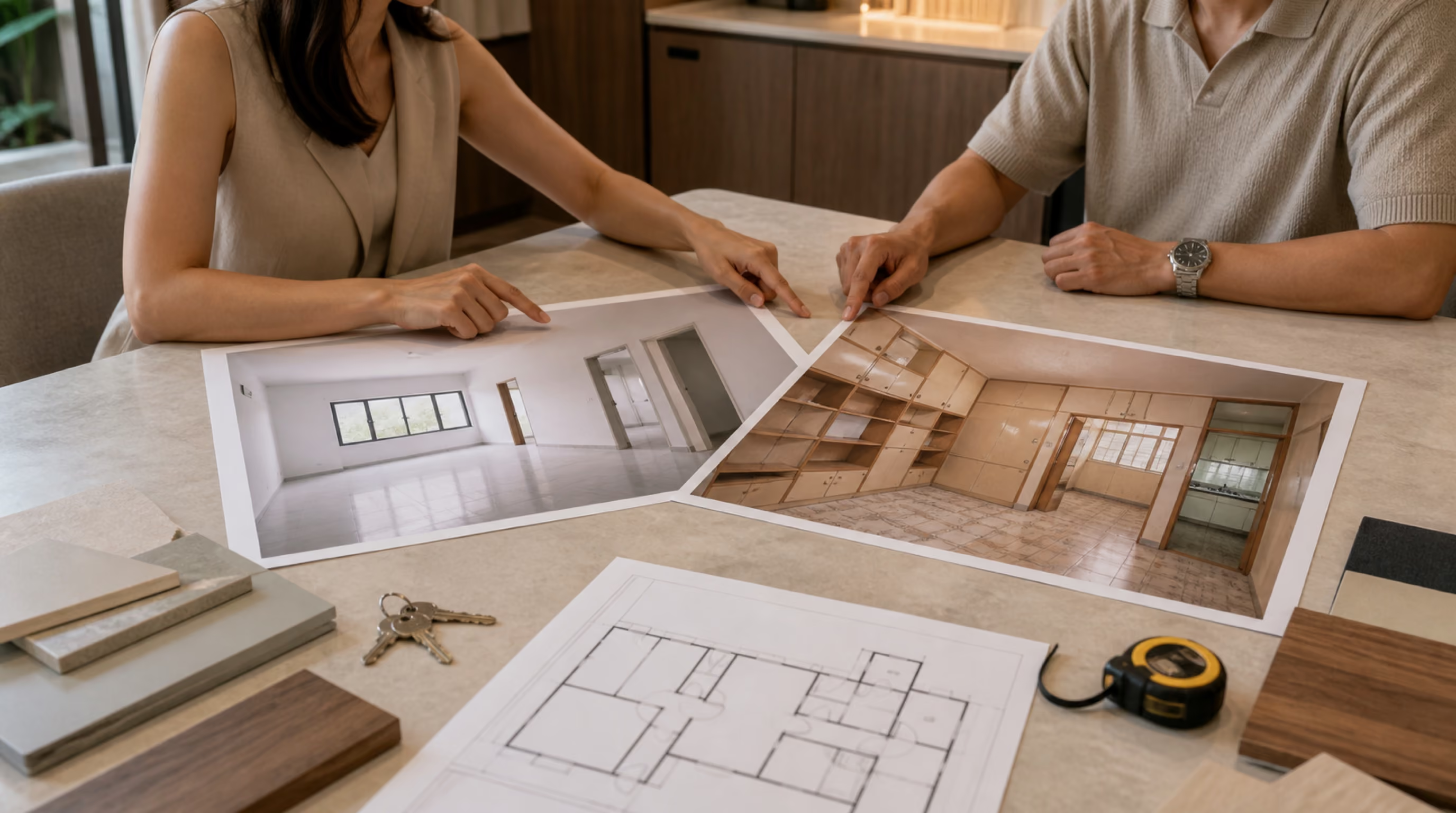
An interior designer's core responsibility is translating a homeowner's lifestyle, taste and budget into a coherent design plan. This typically includes space planning to make the most of your layout, developing a design concept and material palette, producing 3D renders or mood boards so you can visualise the final look, selecting furniture, lighting and finishes, and coordinating colour schemes and textures across the entire home.
A good interior designer also considers practical factors most homeowners wouldn't think to ask about — storage flow, natural light, ventilation, and how different family members will actually use each space day to day. Many interior designers in Singapore today also manage the renovation execution themselves or subcontract trusted contractors, effectively acting as your single point of contact for the entire project.
✅ Designer Insight: Our designers often find that homeowners initially approach a renovation focused purely on aesthetics — a specific style they've seen online — without considering how that style needs to adapt to their actual flat's layout, lighting and family needs. Translating inspiration into something that genuinely works for your home is where design expertise earns its value.
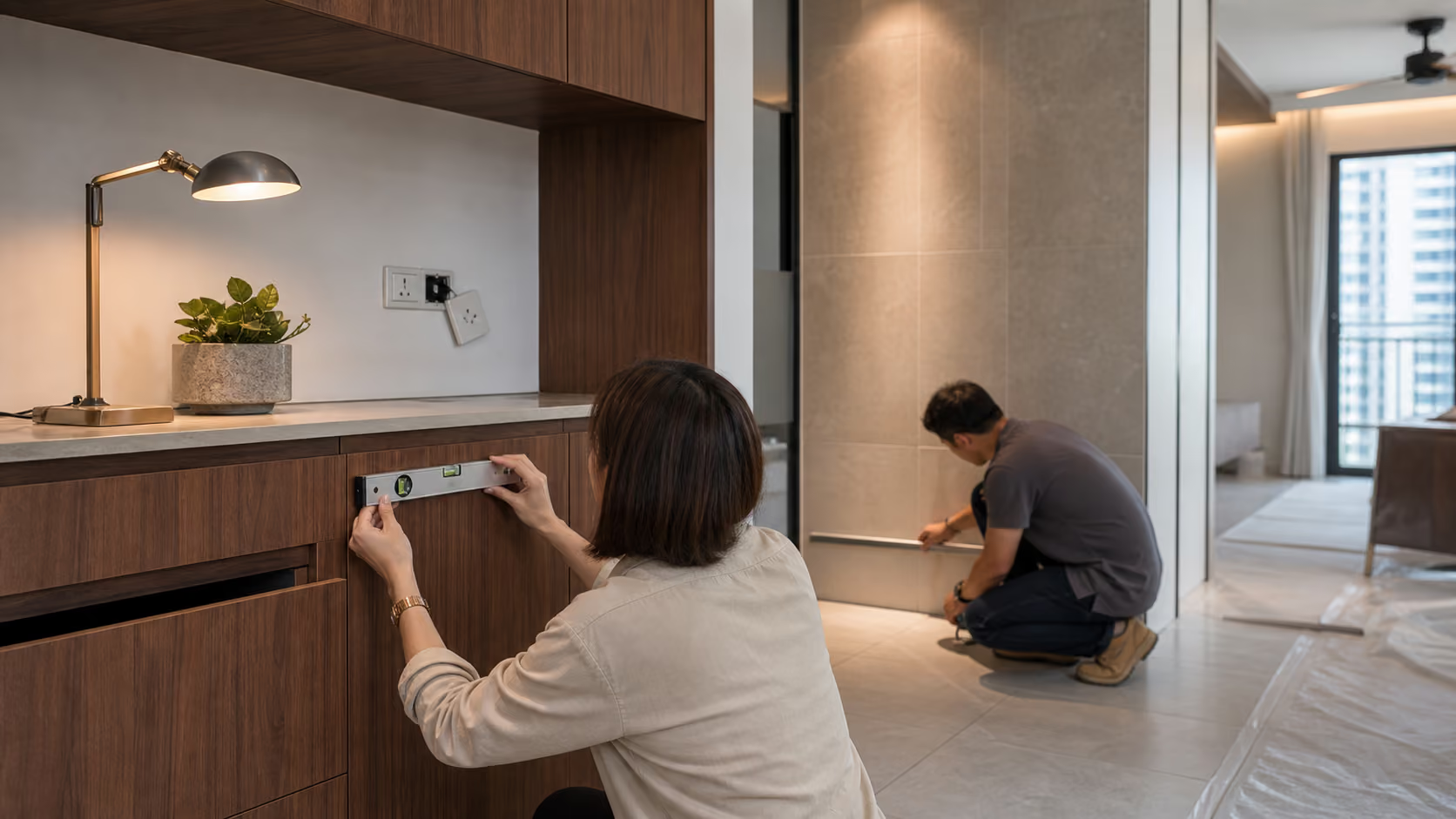
A renovation contractor's core responsibility is physically executing construction work. This includes demolition and hacking, electrical rewiring, plumbing works, tiling and flooring installation, plastering and painting, and carpentry fabrication and installation.
A contractor typically works from a design brief or drawings — either provided by you, an interior designer, or their own in-house team — and focuses on delivering the construction accurately, on schedule, and within the agreed scope. Some contractors offer basic design input, but their core strength lies in construction execution rather than design conceptualisation.
In many resale HDB projects, homeowners who already have strong design ideas of their own — perhaps from a previous renovation or a clear Pinterest board — engage a contractor directly rather than paying for full design services they don't feel they need.
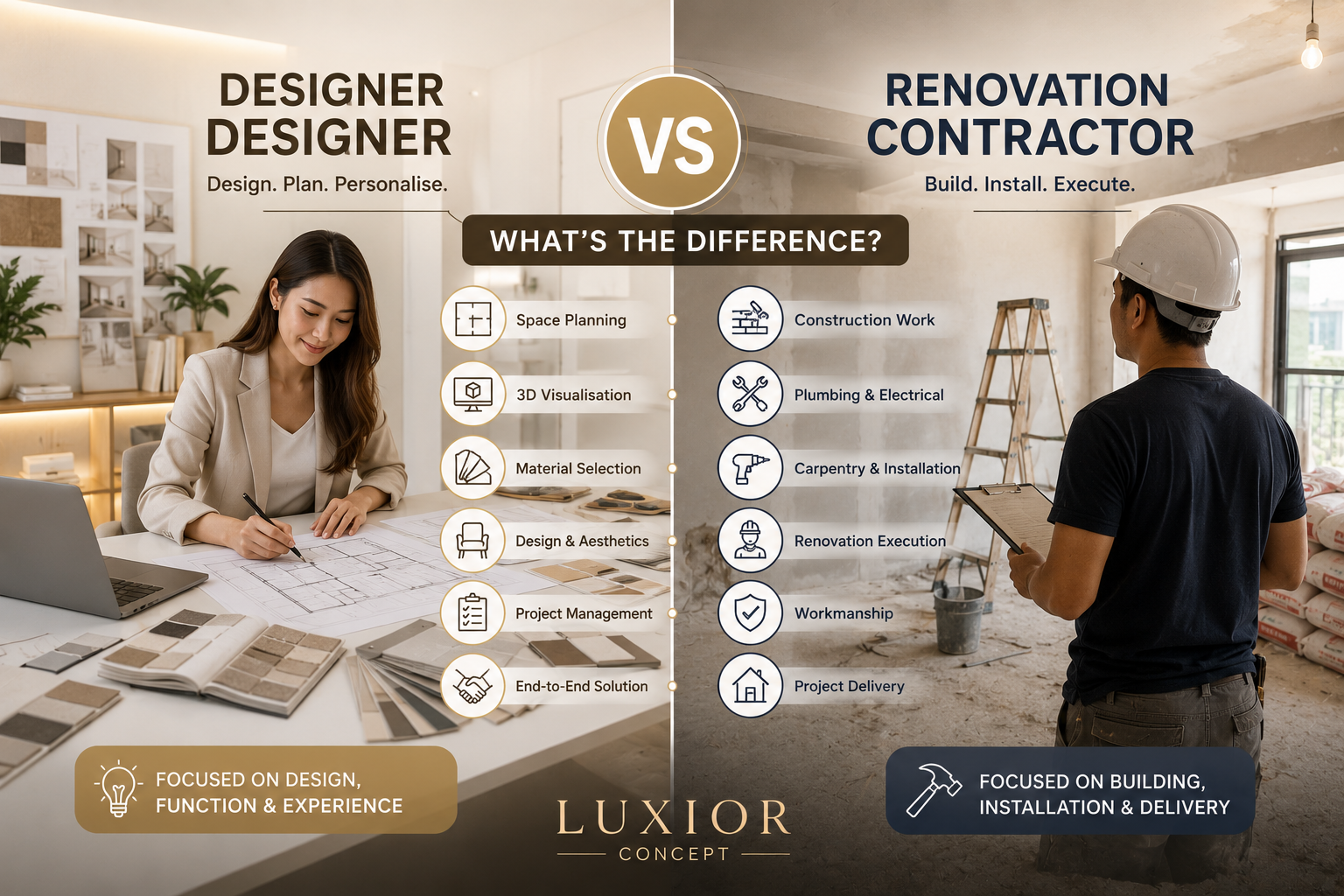
The clearest way to understand the difference is to look at what each role is and isn't responsible for.
An interior designer typically handles space planning, concept development, material and furniture selection, 3D visualisation, and overall project coordination if they're managing the renovation end-to-end. A renovation contractor typically handles the physical construction — hacking, wiring, plumbing, tiling, plastering and carpentry installation — following a design brief rather than creating one from scratch.
Where the two roles blur is project management. Some interior designers manage contractors on your behalf as part of their service, while some contractors also employ in-house designers for basic layout and material advice. This is why it's important to clarify exactly what's included before signing any quotation, rather than assuming a title implies a fixed scope of service.
Engaging an interior designer for full design and project management services typically costs more upfront than going directly to a contractor, since you're paying for design expertise, 3D visualisation, material sourcing and project oversight on top of the construction cost itself. Design fees in Singapore commonly range from 10 to 20 percent of the total renovation budget when charged separately, though many firms bundle design fees into the overall renovation package rather than itemising them.
Going directly to a contractor without a designer can reduce costs if you already have a clear design direction and don't need space planning or material curation support. However, homeowners without renovation experience sometimes underestimate how much time and decision-making a project without design guidance actually requires, which can lead to costly changes mid-renovation if the layout or material choices don't work as expected once construction begins.
✅ Designer Insight: One common issue we encounter is homeowners choosing a contractor-only route to save on design fees, only to spend more later on variation orders after realising mid-renovation that the original layout doesn't suit their storage needs. Design planning upfront often prevents costlier changes once construction is underway.
This is where interior designers have a clear advantage. Space planning requires understanding traffic flow, functional zoning, storage optimisation and how a room will actually be used — skills developed specifically for design work, not construction.
Renovation contractors are generally strong at executing a defined plan accurately, but space planning and design conceptualisation typically aren't their primary area of expertise. If your renovation involves reconfiguring layouts, maximising storage in a compact flat, or creating a cohesive design language across multiple rooms, an interior designer's input tends to deliver noticeably better outcomes.
A full renovation involves coordinating multiple trades — electricians, plumbers, tilers, carpenters and painters — often working in sequence over several weeks. Someone needs to manage scheduling, quality checks, and resolving issues as they arise.
Interior design firms that offer full project management typically handle this coordination as part of their service, giving you a single point of contact throughout the renovation. Contractor-only arrangements sometimes require the homeowner to coordinate between different specialists themselves, unless the contractor offers project management as part of their service — which many established firms in Singapore do.
✅ Designer Insight: From our experience, homeowners managing multiple separate trades themselves — rather than through one coordinated firm — often underestimate how much time this requires, particularly around sequencing works correctly so that, for example, electrical rough-in happens before plastering rather than after.
When design and execution sit under one firm, accountability is generally clearer — if something goes wrong, there's one point of responsibility rather than a design intent getting lost in translation between separate design and construction teams.
When you engage a designer and contractor separately, miscommunication between the two can occasionally lead to execution that doesn't quite match the original design intent. This isn't inevitable, but it's worth discussing clearly defined handover processes and sign-offs at each stage if you do choose to work with separate parties.
An interior designer makes the most sense if you want space planning and layout optimisation, need help visualising the final result before committing, want a cohesive design concept across your entire home, or are renovating a resale flat where reconfiguration and functional planning are more involved. Homeowners with less renovation experience generally benefit from the additional guidance a full-service designer provides.
Going directly to a contractor makes sense if you already have a clear, detailed design plan or drawings, you're doing a more limited scope renovation such as flooring or painting only, you have prior renovation experience and are comfortable managing some coordination yourself, or you're working with a tight budget and want to minimise design fees. This path works best for homeowners who know precisely what they want and don't need significant design input.
In practice, most Singapore homeowners don't choose one role exclusively — they engage a firm that offers both design and construction under one roof, which has become the dominant model in the local renovation industry. This combined approach offers a single point of contact, streamlined communication, and clearer accountability from concept through to completion.
At Luxior Concept, we work this way by design. Our team handles both the interior design and the construction execution in-house, so there's no handoff between a separate designer and contractor where design intent can get lost in translation. One team carries your project from initial space planning through to final handover.
Prefer one team from concept to handover? Explore Luxior’s integrated HDB BTO interior design approach, then share your floor plan if you would like help deciding how much design and project support your renovation needs.
Some homeowners do still choose to engage a designer and contractor separately — for example, hiring an independent interior designer for concept development and then a separate contractor for execution. This can work well for larger or more complex projects, but requires more active coordination from the homeowner to ensure design intent translates accurately into construction.
Timelines can differ depending on which route you choose, mainly because of how much upfront planning happens before construction starts.
A designer-led project typically includes a design development phase of 2 to 4 weeks before construction even begins, covering space planning, material selection and 3D visualisation. While this adds time at the front end, it generally reduces the risk of mid-construction changes, since the plan has already been thoroughly considered before work starts on site.
A contractor-led project, where the homeowner already has a defined plan, can often move to construction more quickly, since there's less upfront design development required. However, if design decisions are still being finalised during construction — a common scenario when homeowners underestimate how many choices a renovation actually involves — this can lead to delays that offset the time saved at the outset.
Once construction begins, actual build time is broadly similar regardless of who's managing the project, since the physical work of hacking, wiring, tiling and carpentry takes roughly the same number of weeks either way.
The two roles also differ in how much day-to-day involvement they typically expect from you as the homeowner.
Interior designers, particularly those offering full project management, generally handle most coordination on your behalf, checking in at key decision points and milestones rather than requiring constant homeowner involvement. This suits homeowners with busy schedules or those who prefer a more hands-off experience once the design direction is agreed.
A contractor-only arrangement, especially without a project manager involved, sometimes requires more direct homeowner involvement — approving material deliveries, coordinating trade schedules, and making on-the-spot decisions when questions arise on site. This can work well for homeowners who want more control and are available to be involved regularly, but it demands more time than many first-time renovators expect.
✅ Designer Insight: In many resale HDB projects, we find that homeowners who underestimate the day-to-day involvement a contractor-only arrangement requires end up feeling overwhelmed partway through construction. Clarifying upfront how much coordination you'll personally need to handle helps set realistic expectations before work begins.
Regardless of whether you choose a designer, a contractor, or a combined firm, it's worth confirming they engage BCA-registered contractors for the actual construction work, particularly for HDB renovations involving structural or wet-area changes. This registration is a baseline indicator of legitimate, accountable workmanship.
Beyond BCA registration, some renovation firms in Singapore hold CaseTrust accreditation, which reflects adherence to fair trading practices and provides an additional layer of consumer protection. It's also worth asking whether the firm is a member of the Renovation and Decoration Contractors and Material Suppliers Association, since membership generally reflects an established, accountable business. For more on formal renovation requirements, see HDB's renovation guidelines.
A few warning signs are worth taking seriously when evaluating either an interior designer or a contractor. Be cautious of firms unwilling to provide a detailed, itemised quotation, since vague pricing often leads to unexpected costs later. Be wary of firms that pressure you to sign quickly without time to review terms, or that can't show a portfolio of completed projects similar to your own flat type. A lack of clear warranty terms, or an inability to explain how variation orders are handled, are also worth questioning before committing.
Assuming a lower quotation from a contractor is automatically better value, without accounting for the design guidance and project management a full-service firm provides.
Hiring an interior designer purely for aesthetics without checking whether they also manage or coordinate the actual construction work, leading to confusion over who's accountable for execution quality.
Skipping a portfolio review, and only realising after signing that the firm's previous work doesn't match the style or flat type you're renovating.
Not clarifying who handles HDB or MCST permit applications, which can cause delays if nobody takes ownership of the approval process.
Assuming all renovation firms in Singapore are BCA-registered, without actually confirming this before signing a contract.
Choosing a designer or contractor based on price alone, without weighing experience, communication style, and how clearly they explain their process.
Not asking how variation orders are priced and approved, leading to disputes over unexpected charges mid-renovation.
Engaging a separate designer and contractor without a clear handover process, resulting in design intent getting lost in translation during construction.
Underestimating how much project management is actually required, particularly for homeowners choosing a contractor-only route without prior renovation experience.
Choosing between an interior designer and a renovation contractor isn't really about picking the "better" option — it's about matching the service to how much design guidance your project genuinely needs. A clear design direction and limited scope might only need a capable contractor. A layout that needs rethinking, or a cohesive look pulled together from scratch, benefits from design expertise. At Luxior Concept, we've built our practice around offering both under one roof, so you're never left managing the gap between the two.
Not sure which approach fits your renovation? Our team can walk through your project scope and recommend the right level of design and construction support.
Book a Free Consultation 👉 or message us directly on WhatsApp.
Engaging a full-service interior designer typically costs more upfront, since you're paying for design expertise, 3D visualisation and project oversight on top of construction. Design fees in Singapore commonly range from 10 to 20 percent of the total renovation budget when charged separately. Going directly to a contractor can reduce costs if you already have a clear design direction, but can lead to costly variation orders if the layout doesn't work as expected once construction begins.
For an initial planning range, use Luxior’s renovation cost calculator, then compare the level of design and project oversight your home actually needs.



.avif)